Despite its own history of colonial oppression, Islamabad chose to be at the forefront of efforts to isolate the National Party regime.
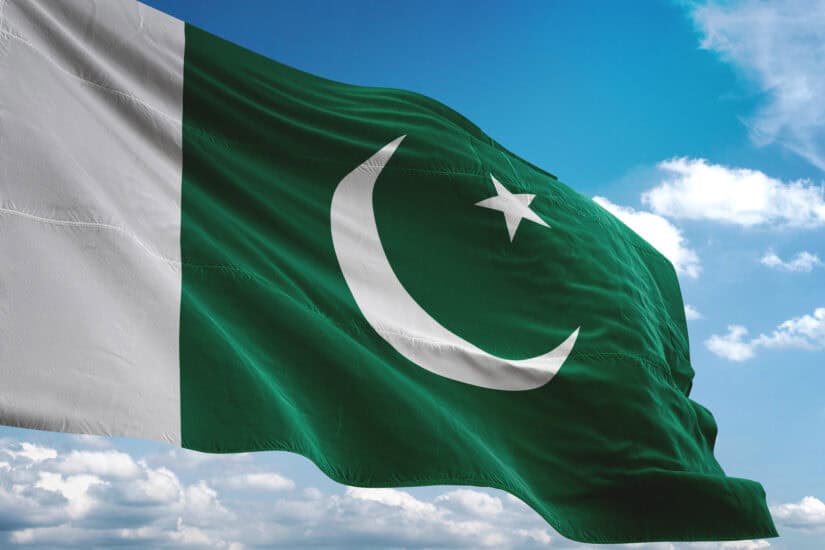
The national flag of Pakistan. Picture: iStock


From a liberation movement perspective, one of the pillars of the anti-apartheid struggle in South Africa was international solidarity.
Yet, we rarely speak about the sacrifices our foreign friends made on our behalf. Perhaps, as free people now, we are engrossed in enjoying the freedom they helped us achieve.
The degree of solidarity varied from country to country, but one nation that consistently punched above its weight was Pakistan. Despite its own history of colonial oppression, Islamabad chose to be at the forefront of efforts to isolate the National Party regime.
This was no easy task. Most influential Western powers supported apartheid and dominated the United Nations (UN).
Pakistan had to work harder to secure recognition of the plight of black South Africans. My recent conversation with Pakistan’s new high commissioner, Malik Muhammad Farooq, confirmed what history records: Pakistan’s stand against apartheid was not an afterthought.
It began even before Pakistan’s birth in August 1947. Muhammad Ali Jinnah, the country’s founder, condemned the treatment of Indians in South Africa as “harsh and cruel” and defied colonial authorities who urged him to soften his language.
He met leaders such as Yusuf Dadoo and Dr GM Naicker, pledging Pakistan’s support for black liberation. Within five years of independence, Pakistan joined Afro-Asian states in placing apartheid on the UN agenda.
This led to resolutions examining South Africa’s racial policies. After the Sharpeville massacre in 1960, Pakistan helped elevate apartheid from a moral concern to an issue of international peace and security.
Islamabad pushed for Resolution 1761 in 1962, calling on all member states to sever diplomatic ties with Pretoria. It followed through with practical measures: banning exports, refusing entry to South African ships and aircraft and declaring its passports invalid for travel to South Africa and Israel.
Pakistan’s activism continued through the 1970s. It co-sponsored the resolution that stripped apartheid South Africa of its UN credentials.
Its then foreign minister, Zulfikar Ali Bhutto, declared: “Pakistan opposes apartheid. It is not because it is fashionable. It is because it is rooted in our ideology.”
Pakistan pressed for mandatory arms embargoes, condemned the Soweto massacre, and described the 1977 embargo as a “nail in the coffin” for apartheid. In the 1980s, it co-sponsored oil embargoes and maintained pressure as repression deepened under PW Botha.
This solidarity was not unnoticed. The ANC acknowledged Pakistan’s role before the Truth and Reconciliation Commission, noting that Pakistan, along with India and African states, hosted its cadres.
Nelson Mandela himself visited Pakistan in 1992, receiving the country’s highest civil honours, the Nishan-i-Pakistan (Order of Pakistan) and the prestigious Nishan-e-Quaid-e-Azam (Order of the Great Leader), named after Muhammad Ali Jinnah.
On a farewell visit prior to his departure as president on 4 May, 1999, Mandela addressed the joint sitting of the Pakistani parliament, declaring: “Pakistan’s proud history of solidarity with struggles in Africa against colonialism and apartheid makes your country a true partner in the rebirth of our continent.”
The relationship was symbolically reinforced when Benazir Bhutto attended Mandela’s inauguration in May 1994 and President Mamnoon Hussain attended his funeral in December 2013.
These gestures showed Pakistan’s support was not confined to declarations but included diplomatic initiatives, sanctions, practical assistance and trust that endured into the democratic era.
Pakistan’s contribution remains a source of abiding pride for Islamabad – and a reminder to South Africans that liberation was never achieved alone. International solidarity, embodied by Pakistan’s steadfastness, was a vital pillar of our freedom.
To forget that history is to overlook the global dimension of our liberation.