Defence seeks medical assessment amid consultation difficulties.
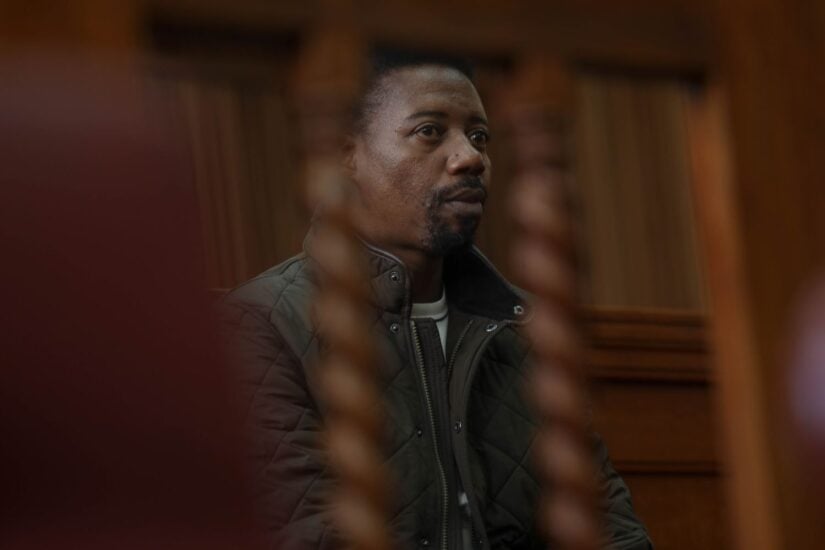
Ndodana Mkhanyisi Tshuma appears before the Johannesburg Magistrate’s Court on 8 September 2026. Picture: Gallo Images / Sharon Seretlo


The plea agreement involving triple-murder suspect Ndodana Mkhanyisi Tshuma faces uncertainty after his lawyer revealed that the accused could not recall pleading guilty to the charges against him.
Tshuma appeared in the Johannesburg Magistrate’s Court on Wednesday, 21 October 2026, as efforts to extradite him to the United Kingdom (UK) continue.
The proceedings took an unexpected turn when the defence raised concerns about its ability to communicate effectively with its client and finalise the agreement with the state.
Tshuma had previously pleaded guilty on 8 September to charges of unlawfully possessing a firearm and ammunition, as well as contravening the Immigration Act after allegedly entering South Africa illegally.
However, the defence’s latest concerns have delayed the conclusion of the plea negotiations.
UK fugitive Ndodana Tshuma plea deal in jeopardy
Prosecutor Lorraine Kgaditsi told the court that the state was prepared to proceed with the Section 105A plea agreement, but the defence indicated that it was experiencing difficulties during consultations with Tshuma.
His lawyer, Chrispen Machingura, cited concerns about his mental state and ability to engage meaningfully in discussions about the agreement.
“Your Worship, we have walked into a difficulty where we are not understanding each other well with the accused person.
“My conversation with him has led me to come to court and request if it is possible to have him evaluated so that we can see where he is.
“He did not sound well, but before the court, we need to assess his sobriety and we’ll take it from there,” Machingura said.
When asked to clarify his concerns, Machingura explained that Tshuma, a British citizen of Zimbabwean descent, had complained about difficulties sleeping.
The defence proposed an assessment by a medical specialist to determine whether Tshuma was fit to continue with the plea negotiations.
State challenges request for assessment
This was met with resistance from Kgaditsi, who argued that the defence had not presented sufficient grounds to justify the assessment.
The prosecutor told the court the state could not establish whether Tshuma’s reported sleeping difficulties warranted a psychiatric evaluation or whether another medical issue needed to be considered.
“Your Worship has no evidence before her indicating that the accused person suffers from any health or mental condition whatsoever,” she contended.
Kgaditsi further indicated that the defence appeared to be raising issues covered by Section 77 of the Criminal Procedure Act (CPA).
The provision deals with the fitness of an accused person to stand trial where mental illness or intellectual disability may prevent them from understanding court proceedings.
Machingura supported the need to address the issue, saying his client was unable to recall several matters discussed and agreed upon during their consultations.
“I fear a situation where before [the court] I am saying one thing and it does not reflect to him like that.”
The magistrate adjourned the matter to give the defence an opportunity to prepare an application.
Accused allegedly unable to recall guilty plea
When proceedings resumed after the break, Machingura revealed that the situation had become more complicated, with Tshuma disputing that he had pleaded guilty to his charges.
“The client made it very clear to me that he does not remember or recall pleading guilty to the four charges.
“It then left me with a big problem: how do I come here and say I am going to finalise a plea that he does not remember?”
The revelation put the defence in a difficult position, as the lawyer indicated he could not finalise an agreement without clear instructions from his client.
Machingura requested a postponement to allow further consultations with Tshuma and establish a position on the way forward.
The court postponed the case to 29 October.
Speaking to the media outside court, Machingura explained that the parties had spent approximately five weeks negotiating the agreement and had already settled its terms, including the proposed sentence.
However, the defence lawyer highlighted that finalising the agreement had become difficult after Tshuma indicated that he could not remember signing it.
Machingura emphasised the negotiations could not continue unless a way was found to resolve the disagreement between the accused and his legal team.
“We have to find a way of him acknowledging that this is where we are, and if he does not, I’m sure the 105 collapses officially and then we take it from there.”
Triple murder
British authorities are seeking Tshuma in connection with the deaths of his wife, Nothabo Zandile Tshuma, 42, and their daughters Natalie, 15, and Nala, five.
The three family members were found dead at their Great Denham home in Bedfordshire England, on 7 July.
They had suffered fatal head injuries.
Tshuma had allegedly left the UK two days before the bodies were discovered.
His movements eventually led investigators to South Africa, where he was arrested in Kensington, Johannesburg, on 10 July.
At the time of his arrest, Tshuma, who abandoned his bail application on 13 July, was allegedly found with an unlicensed 9mm firearm and ammunition.