The EFF and ALPA are challenging the Section 89 Impeachment Committee's reversal of chief evidence leader Thandazani Madonsela's appointment in the Phala Phala scandal.
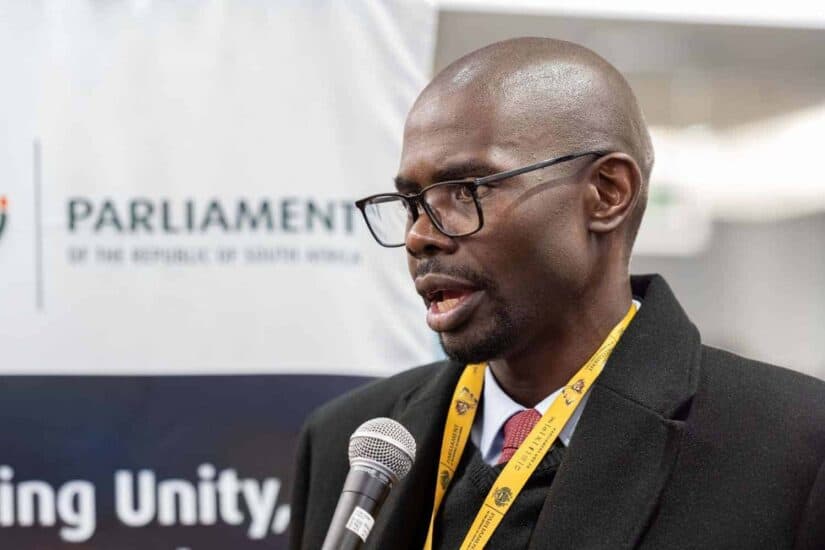
Makashule Gana at Cape Town International Convention Centre (CTICC) on 21 May 2025. Picture: Gallo Images/Jeffrey Abrahams


The chairperson of parliament’s Section 89 Impeachment Committee, Makashule Gana, says the committee is confident that the court will uphold its handling of the appointment of Advocate Thandazani Griffiths Madonsela SC as chief evidence leader.
A high-stakes constitutional showdown is expected in the Western Cape High Court as the EFF and the African Legal Professionals Association (ALPA) challenge decisions taken by parliament’s Section 89 Impeachment Committee.
Dual applications
The two legal applications, expected to be heard on 13 and 14 October 2026, seek to overturn the committee’s decision to appoint Advocate Madonsela as chief evidence leader for the Phala Phala impeachment inquiry.
Members of parliament (MPs) resolved to defend their decision to withdraw Advocate Thandazani Madonsela’s nomination.
The Section 89 Impeachment Committee voted on 9 September 2026 to oppose a legal challenge brought by the EFF over Madonsela’s removal from consideration for the position.
The dispute stems from the committee’s handling of the appointment process for the evidence leader, who will guide the evidence-gathering phase of the inquiry into President Cyril Ramaphosa’s conduct in relation to the 2020 Phala Phala game farm robbery.
Gana confirmed that the Western Cape High Court will hear the applications over two days.
“The Western Cape High Court will be hearing the applications that have been brought by the EFF and ALPA into the decision of the impeachment committee to receive the recommendation for Advocate Madonsela,” Gana said.
Committee acted lawfully
According to Gana, he has opposed both applications and will argue that the committee acted lawfully throughout the process of selecting Madonsela SC.
“As chairperson of the committee, I have opposed both the applications by the EFF and the ALPA, and will be making strong arguments before the judges of the Western Cape High Court,” he said.
Gana maintained that the committee complied with parliament’s rules and established practices.
“At each time, every step of the way, we acted within the rules of the National Assembly. We acted within the practices of the National Assembly, and the decision of recommending Advocate Madonsela as the evidence leader,” he said.
Significant test
The court challenge represents another significant test for the Section 89 process, which is tasked with determining whether Ramaphosa has a case to answer under parliament’s impeachment provisions.
Despite the legal challenge, Gana said he remained confident of a favourable outcome.
“I am very much confident that the court will agree with ourselves and that’s why we have opposed these two applications by the EFF and ALPA,” he said.
The outcome of the hearing could have significant implications for the progression of the impeachment inquiry.
Nomination
Madonsela’s nomination became contentious after Ramaphosa formally objected to his appointment in correspondence sent to the committee on 18 August.
The president raised concerns about Madonsela’s previous involvement in the matter, including his role in providing legal advice to the ANC on the impeachment issue.
Ramaphosa argued that this raised potential lawyer-client confidentiality concerns and could put Madonsela in an unfair position if he were appointed as the inquiry’s evidence leader.
The president also pointed to Madonsela’s removal from the JSC in 2022, arguing that the circumstances could contribute to a potential conflict.
ConCourt ruling
The latest court proceedings form part of a much longer legal and political battle surrounding the Phala Phala scandal.
In May this year, the Constitutional Court (ConCourt) found that parliament had acted unlawfully when it stopped the impeachment process against Ramaphosa through a vote in December 2022.
The ruling resulted in an order compelling the National Assembly to establish a formal impeachment committee to examine the allegations.
The committee comprises 31 MPs from 16 political parties.
It has since been undertaking preparatory work, but its public hearings have not proceeded after Ramaphosa secured an interdict from the High Court on 24 July.