



South Africa's immigration challenges spark national debate, touching on issues of border security, public services, economic impact, and social cohesion.


South Africa’s immigration challenges continue to spark intense national debate, touching on issues of border security, public services, economic impact, and social cohesion.
With local elections approaching, voters are looking to see how each major party plans to manage migration and regulate movement into the country.
While political parties agree that current systems need reform, their proposed solutions differ, ranging from open, growth-focused integration and freedom of movement to strict border controls, enforcement, and state-led policing of documentation.

LIVE interactive map, latest news, multimedia and more!
View MapHere is how the country’s 4 biggest political parties approach immigration:
ANC
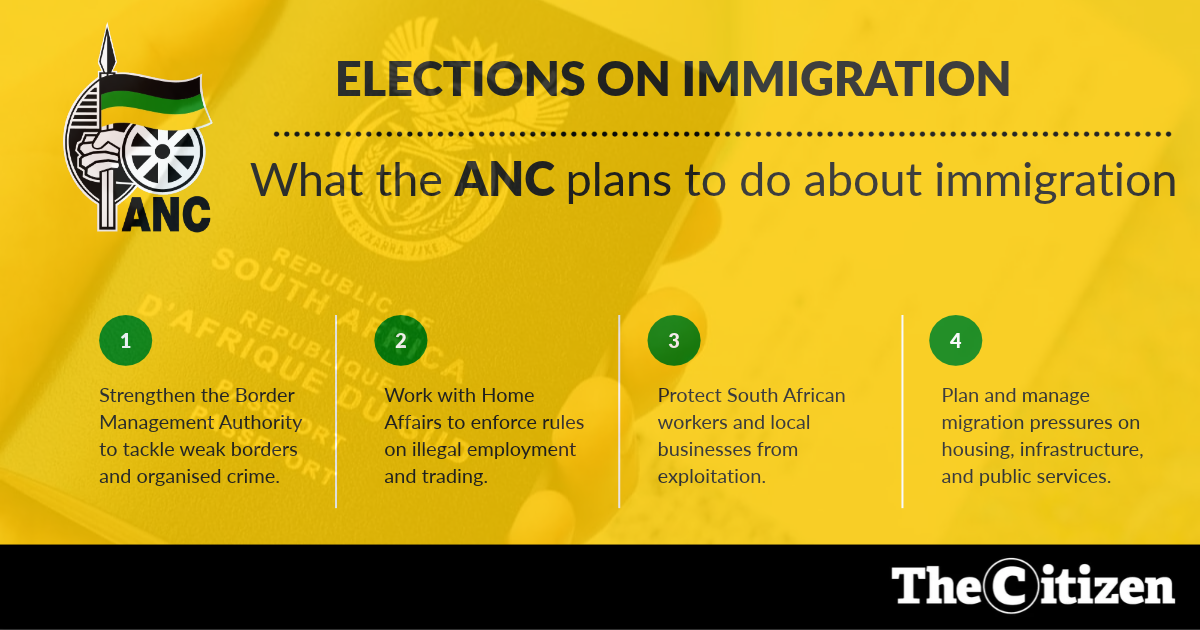
For the ANC, managing immigration relies heavily on strengthening border security, fixing administrative systems, and protecting local communities from illegal practices.
The party’s strategy focuses on strengthening the Border Management Authority (BMA) with better resources, infrastructure, and inter-agency coordination to combat weak borders, illegal mining, and organised crime.
At the local level, the ANC commits to working with the Department of Home Affairs and law enforcement to enforce compliance with laws on unlawful employment, illegal trading, and unsafe housing.
Their approach emphasises protecting South African workers and businesses from exploitation while ensuring that population growth and migration pressures on municipal services, housing, and infrastructure are properly planned for and managed.
DA
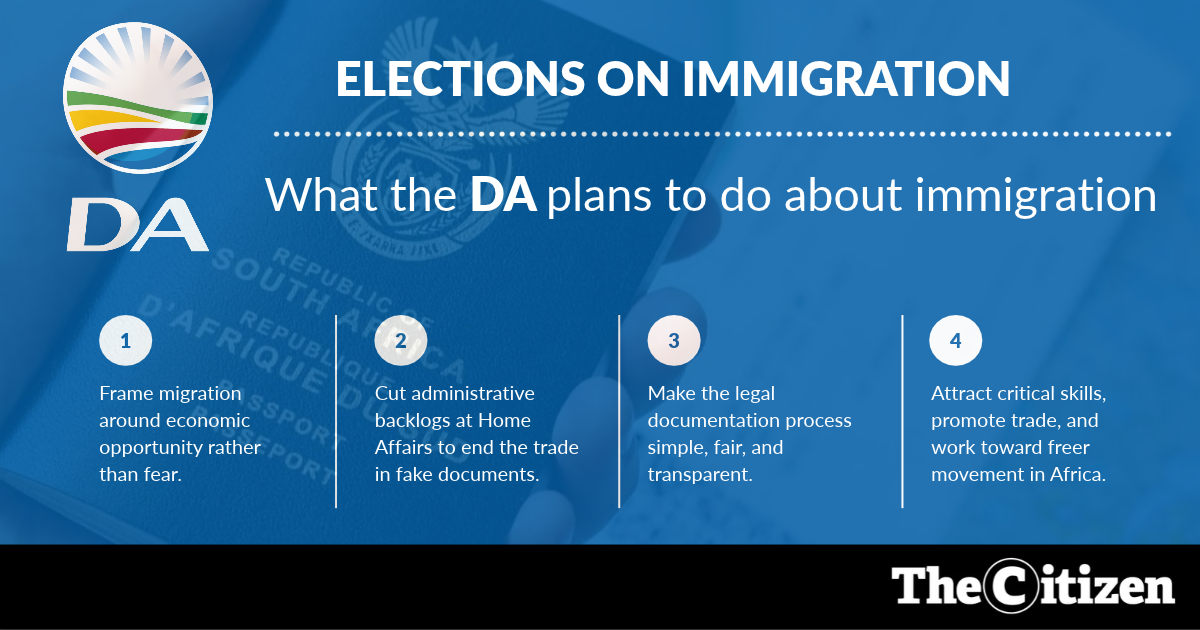
For the DA, migration policy should be framed around opportunity rather than fear, focusing on legal compliance, economic contribution, and regional integration.
The party argues that the current system is hindered by administrative backlogs and high rejection rates at Home Affairs, which inadvertently drive an illicit market for false documents.
To fix this, the DA proposes making the documentation process accessible, fair, and transparent so that foreign nationals can enter and remain legally.
The DA highlights research showing that migrant workers and business owners contribute positively to the economy, pay taxes, and often create jobs for local citizens.
Their policy aims to attract skills, promote trade, boost tourism, and progressively work toward freedom of movement across the African continent while addressing legitimate public concerns through better management rather than exclusion.
EFF
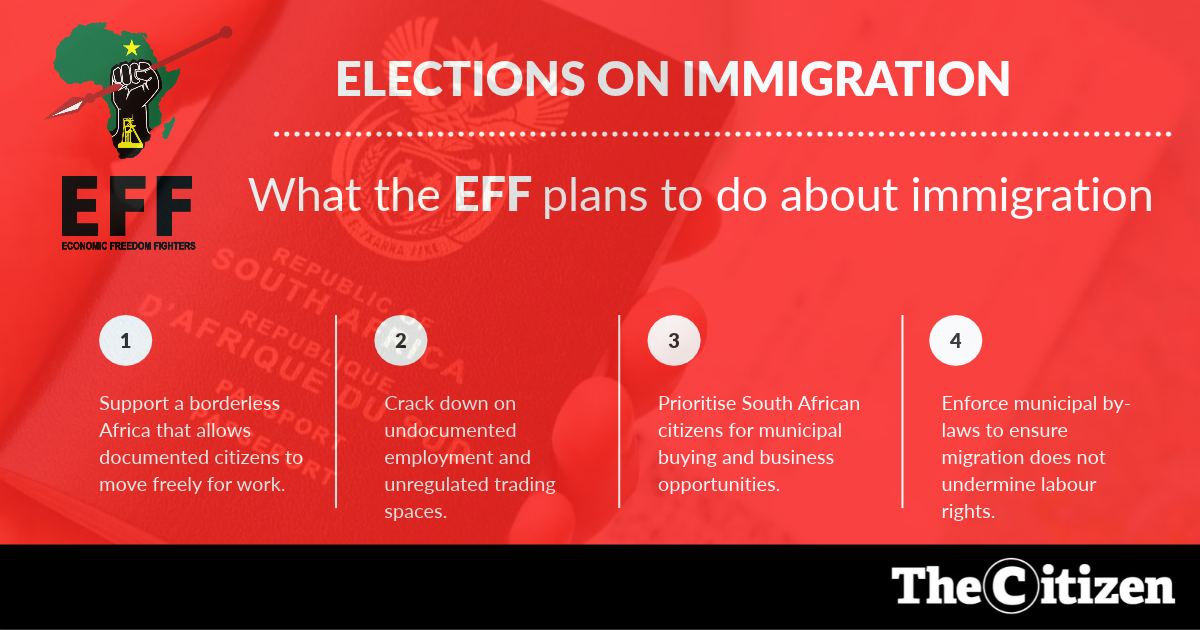
While advocating for a borderless Africa that lets documented citizens move freely for economic opportunity and growth, the EFF’s immigration policy also stresses protecting local labour markets, enforcing municipal by-laws, and ensuring strict legal compliance across all economic sectors.
The party’s local government framework stresses that municipalities must work with national departments to crack down on undocumented employment and unregulated trading spaces.
The EFF aims to protect local workers and small businesses by ensuring that municipal procurement and economic opportunities prioritise South African citizens.
Furthermore, their approach emphasises strict enforcement against illegal operations and ensuring that migration does not undermine labour rights or local community development.
MKP
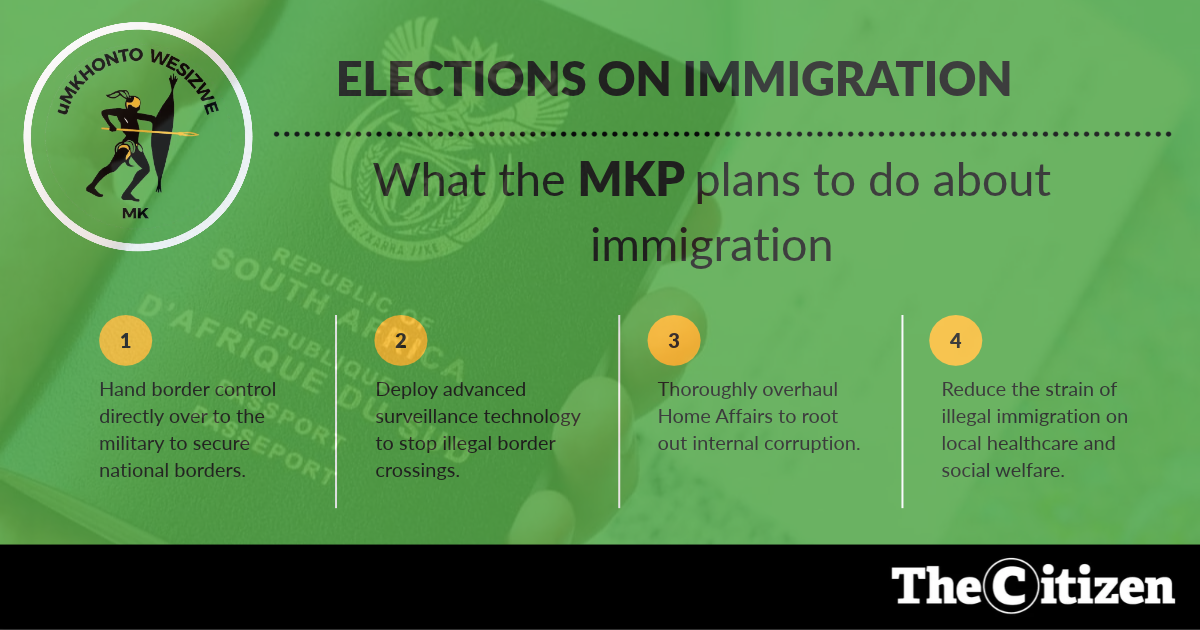
For the MK Party, immigration and border control require hardline state intervention, militarisation, and a complete overhaul of national security infrastructure.
The party contends that illegal immigration places an unsustainable strain on public services like healthcare, education, and social welfare.
To address this, the MKP proposes assigning border control directly to the military and deploying advanced technology to secure national borders.
Additionally, the party aims to thoroughly overhaul the Department of Home Affairs to eliminate corruption, update immigration systems, and drastically improve the operational effectiveness of the Border Management Authority.
A choice for South Africa’s future
The differences between these manifestos highlight a fundamental choice for South Africa.
Whether voters prefer the DA’s focus on economic opportunity, the ANC’s balance of border enforcement, the EFF’s push for a borderless Africa and protection of local labour markets, or the MKP’s demand for military-led border security, immigration remains a pivotal issue for local and national governance.
As election day draws near, voters will decide which approach best addresses the country’s economic and social realities.