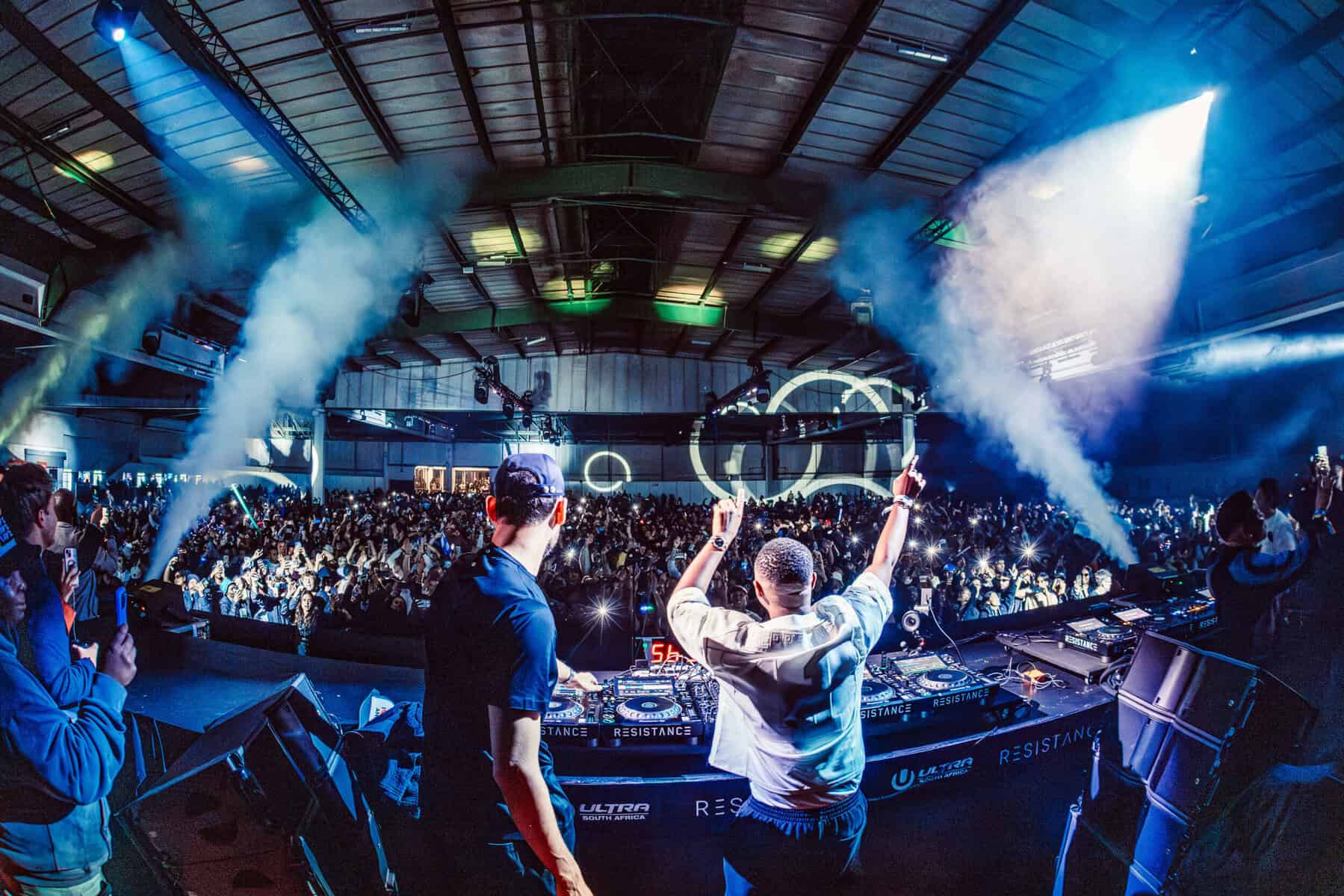
Shimza and Afrojack's back-to-back set at the Resistance stage had tongues wagging.
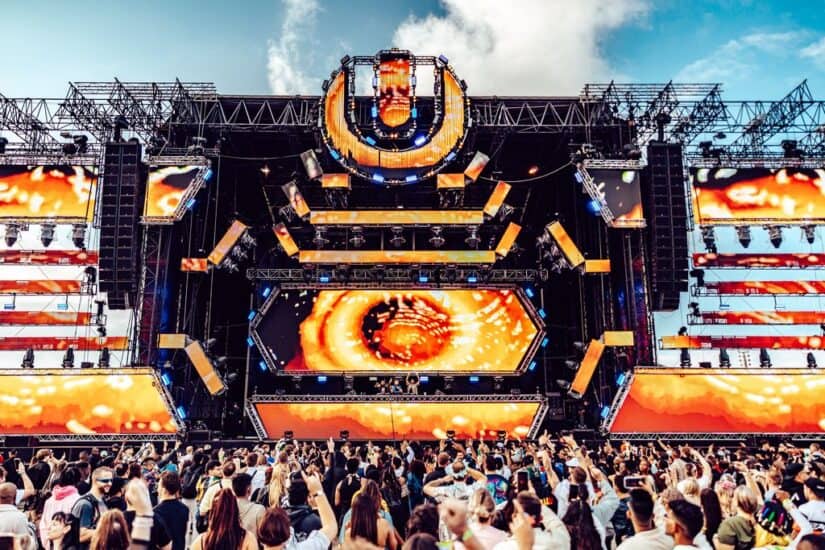
The main stage at Ultra South Africa at the Nasrec Expo Centre, on 27 April 2026. Picture: Ultra


Ultra South Africa’s 11th edition landed exactly as promised: loud, electric and unapologetically Mzansi.
The electronic music festival returned to Johannesburg’s Expo Centre Nasrec on Saturday, 25 April, and it did not disappoint.
The event felt less like a traditional concert and more like a giant night market where festive outfits, cold air and relentless energy collided across four distinct stages.
The weather gods were firmly on the side of the festival as not a single drop of rain threatened the night.
Logistics ran smoothly too; wristband queues and food card top-ups moved at a pace that kept the experience seamless, with waits rarely exceeding two minutes.
Four stages, four worlds
The defining features of this year’s event remained familiar, with the Ultra Main Stage being the spectacle.
It featured pyrotechnics, massive production and a sound system that could be felt in your chest.
The enclosed Resistance stage leaned darker and more intimate.
Meanwhile, the Groove Room celebrated the richness of Mzansi’s electronic sounds, and the Confessions stage rounded out the offering.
What made the layout particularly special was the way the stages bled into each other.
Moving between The Groove Room and the Main Stage, you could catch both soundscapes at once, a kind of flow-state moment.
The set times were also staggered thoughtfully enough that even when favourites clashed, you could still catch at least 20 to 30 minutes of each act.
The crowd was genuinely spoiled for musical choice.
South African talent to the world
The Groove Room was the most Mzansi part of the event.
Acts like Scorpion Kings, DBN Gogo, Sun-El Musician, Dlala Thukzin and Oscar Mbo filled the space with sounds that felt both globally relevant and deeply rooted at home.
It was also the stage that drew an unexpected guest, after DJ Snake’s Main Stage set wrapped up, he made his way to the Groove Room to watch DJ Maphorisa and Kabza De Small, a moment that captured just how far African music has travelled.
Shimza, who headlined the Resistance stage, took time to explore the festival grounds before his set and was candid about what the Groove Room represented.
“It’s such a dope representation of what’s happening on the local sound in South Africa,” he told The Citizen.
The well travelled DJ pointed to the likes of Dlala Thukzin, DBN Gogo and Sun-El Musician as examples of a generation pushing the country’s sound forward, adding that putting together a festival with different stages, each with its own identity, was something he genuinely appreciated.
For Shimza, the creative output coming out of South Africa is not incidental, it is a reflection of something deeper.
“The music that we make gets so consumed by the world that it just proves how creative we are as a nation,” he said.
“As we are creating, we are creating more stars, because every genre comes with its own new generation of people who are sort of in the forefront of that sound.”
Breaking barriers at the Resistance stage
Shimza and Afrojack’s back-to-back set at the Resistance stage had tongues wagging.
This collaboration first turned heads when it debuted at Coachella this year.
At Ultra South Africa, the set took on a different dimension: this was Shimza’s home turf. The Thembisa-born DJ was deliberate about what that meant.
He described the set as an opportunity to bring Afrojack into his own world.
“It’s up to me to bring him to our side, to introduce him to a market that ordinarily would not go to the main stage to listen to him, but be in the Groove Room to listen to what they are familiar with,” he explained.
The intention was clear, find the middle ground, and make it work for everyone in the room.
The Coachella collaboration itself came about through a booking agent, who was looking for something fresh.
Shimza admitted his initial reaction was disbelief but he quickly saw it for what it was.
“I got to sit back and think about it, and I was like, this is actually an opportunity for us to change the stereotype of where our music sits,” he said.
The two had already been working on music together before Coachella and are now planning a joint release and a potential global tour.
Kitty Amor, who performed on the Resistance stage earlier in the evening, echoed the significance of these cross-genre partnerships.
She pointed to the growing global presence of Afro house, noting that it had appeared at Coachella for several consecutive years.
“That moment with Shimza and Afrojack is a huge example of how collaboration or those transatlantic relationships can actually be for the betterment of the sound,” she said.
Paying homage and looking forward
Kitty Amor’s handover to Major League DJz at the Resistance stage was one of the evening’s standout moments, a seamless transition that the crowd felt in real time.
The London-based DJ and producer, who has been touring South Africa for several years, speaks about the country with the warmth of someone who has genuinely made it their second home.
“It feels good to be home,” she said ahead of her set, describing Ultra as one of her favourite festivals.
Her relationship with South Africa has not merely been sentimental; it has actively shaped her sound.
She described the country as a place where her ear was fine-tuned over years of touring and observing how music evolves across the continent.
Amor spoke about absorbing the sonic elements of local sub-genres, including the hard kick drums of 3-step, and filtering them into her own Afro house productions.
“There’s little bits from different genres that I have been hearing out and I’m like, I could actually put that in a more electronic way,” she said.
Her set leaned into that history deliberately.
“I’m paying homage to the very nostalgic sounds of the early Afro house days,” she said.
On the question of Afro house’s rapid global rise and whether that visibility risks diluting the culture, Kitty Amor offered a nuanced take.
She argued that the more pressing responsibility lies in ensuring that the originators travel with the sound.
“It’s nice to see the likes of Da Capo, Caiiro, Major League, and Shimza. “It’s nice to see these people in different parts of the world ensuring that they are part of the story,” she said.
The classical-electronic alchemist returns to South Africa
Belgian-born Canadian producer Apashe brought his signature blend of electronic music, hip-hop and classical composition to the Main Stage.
This was his first time back in South Africa in 11 years.
Apashe’s creative process is concept-first. He said each album or EP is built around a universe of ideas before a single note is committed to record.
He is currently in the early stages of building the concept for a project, which he described as his biggest source of excitement for the rest of 2026.
His 2020 album Renaissance, recorded with a 69-piece orchestra, remains one of the most ambitious projects in electronic music.
He explained that his approach to bridging classical composition with heavy production was rooted in his beginnings as a beatmaker who sampled classical music.
When it came time to record with a live orchestra, he composed pieces he would have wanted to sample himself.
“Once I have the recording, I would chop it up, sample it and destroy it, the same way I would have sampled any composer,” he said.
His influences reflect that breadth. He cited Danny Elfman, John Williams and beatmaker Adam F as three artists who have inspired his approach, acknowledging that the list changes depending on his mood on any given day.
He was equally candid about the more unglamorous realities of a career in electronic music.
When asked about the most underrated skill for a successful producer, his answer was unexpected but sincere.
“Being able to recover and sleep anywhere,” he said.
“A lot of people under pressure and low sleep will tend to not perform well or tend to not be at their best, and I feel like the people who manage to actually recover and be well when they don’t have a lot of sleep, it’s like a real skill and it has value.”
DJ Snake turns down the Main Stage
If there was a single Main Stage moment that united the entire festival ground, it was DJ Snake’s epic set.
The French producer ran through a greatest hits masterclass that reminded the crowd exactly why he is one of the most recognisable names in electronic music.
From the bass-heavy swagger of Turn Down for What to the dancehall warmth of Lean On, the anthemic Taki Taki and the smooth pull of Let Me Love You, each track landed like a shared memory the crowd had been waiting to relive.
One of the set’s many peaks came when DJ Snake brought out Zimbabwean artist Bantu for a live performance, sending the crowd into a frenzy.
A night that earned its reputation
As the night deepened, the fires from the stages kept the cold at bay and the energy sustained.
Bean bags, chairs and open grass gave people space to breathe between sets, a necessary reprieve in a night that asked a great deal of its attendees.
The question most people arrived with, whether the cold would win, was answered emphatically. It did not.