Now made at the Chennai plant, the Duster will replace the outgoing variant made in Romania.

Made-in-India Duster will debut on 13 August. Picture: Renault India


Shown towards the end of June as being en route to South Africa from its new sourcing destination, India, Renault South Africa has confirmed 13 August as the launch date for the “new” Duster.
Now made in Chennai
Set to replace the current Duster sourced from Mioveni, Romania, the Indian version will be produced at the Chennai plant, which currently produces the Kwid, Triber, Kiger and soon, the Boreal.
The same facility that assembles the Nissan Magnite, Gravite and the Duster’s twin, the Tekton, the newcomer differs both aesthetically and fundamentally from its sibling, despite being based on the same CMF-B platform.
What has changed?
Visually, the Indian Duster receives restyled front and rear bumpers, a different grille with block letter Duster instead of Renault badging, an integrated imitation skidplate and nudge bar, and wider air inlets on the flanks of the front bumper.
Also new are the headlights, the shoulder line underneath the D-pillar and the design of the up to 18-inch alloy wheels.
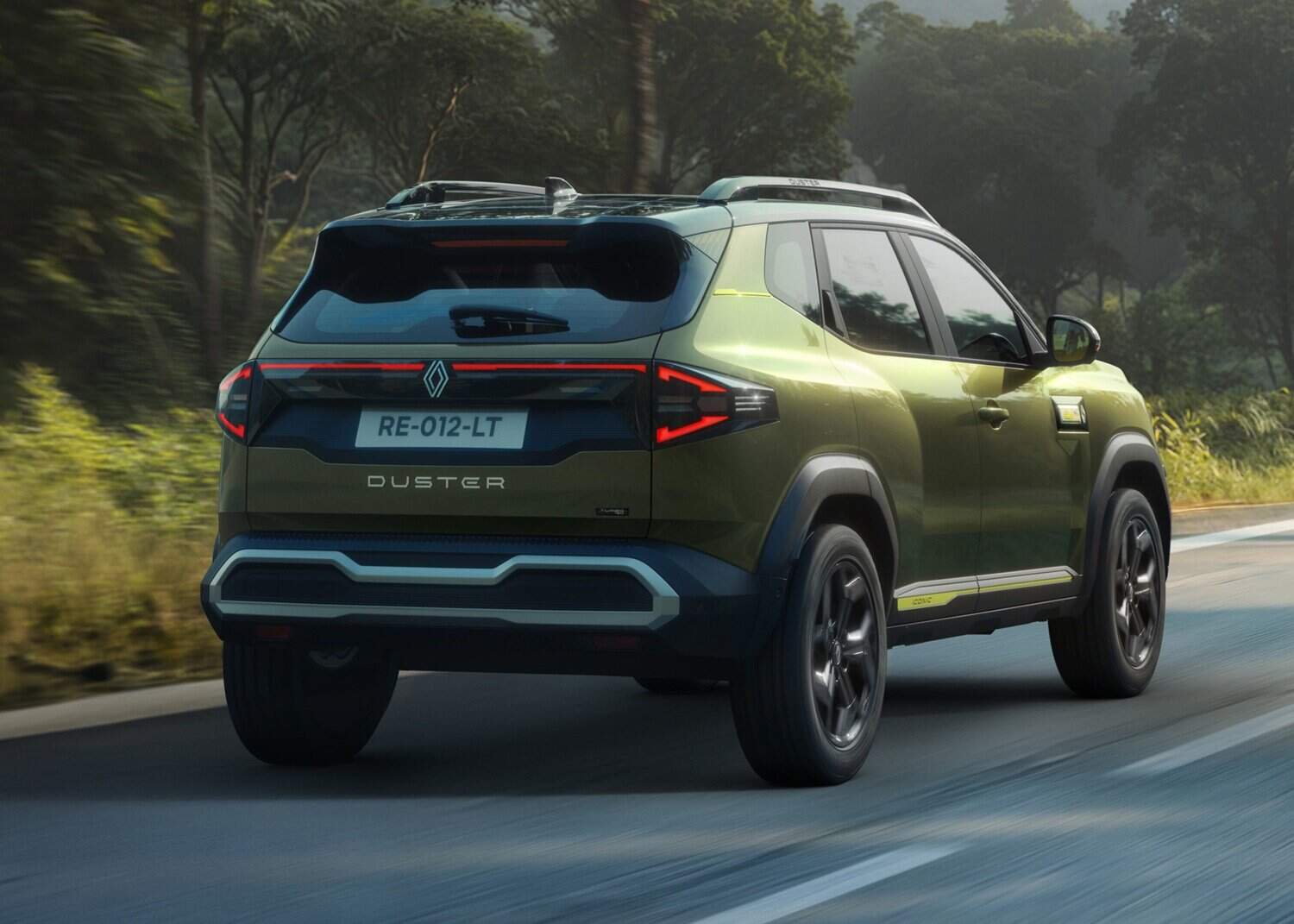
At the rear, the Dacia corporate sideways V-shaped light clusters remain, but now connected by LED light bar running atop the window line.
The final change involves a blackened numberplate cavity and an integrated satin silver imitation skidplate below the bumper.
Dimensional differences
Dimensionally, the Indian Duster is as follows:
- Length: 4 343 mm;
- Wheelbase: 2 657 mm;
- Height: 1 669 mm
- Width: 1 921 mm
By comparison, the Romanian Duster, which Renault stated in 2024 had been a stopgap until the Chennai facility started production, has the following:
- Length: 4 343 mm;
- Wheelbase: 2 657 mm;
- Height: 1 661 mm;
- Width: 1 813 mm
Along with the subtle differences, the Indian model offers 213 mm of ground clearance versus its Romanian sibling’s 209 mm, and boot space between 518 and 1 789-litres compared to 472 and 1 609-litres.
New inside
Inside, the interior changes are just as prominent and include reported improved materials, the same dashboard design as the new Clio, a tweaked steering wheel, new air vents and a restyled centre console, as well as central hangdown section.
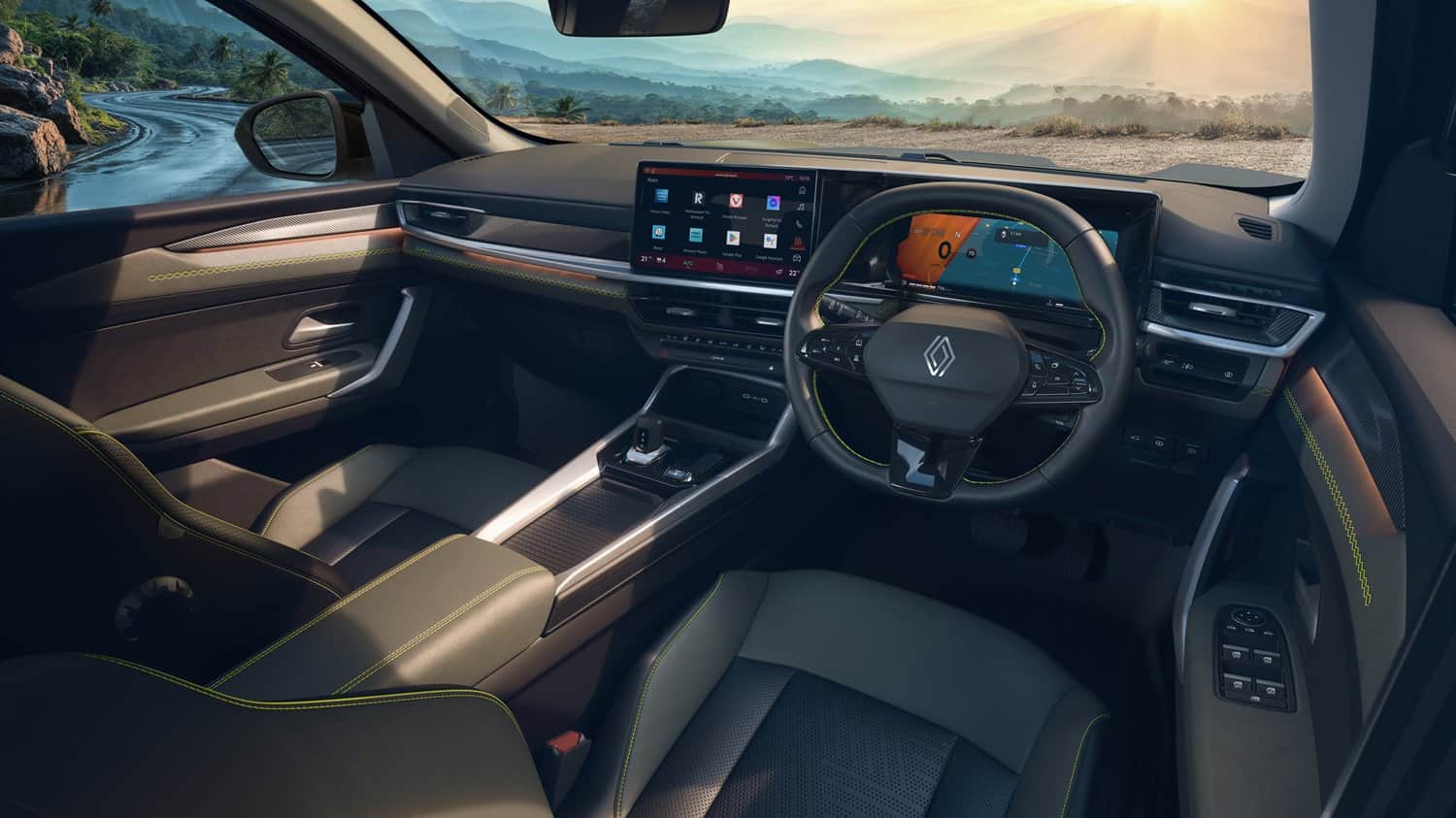
The biggest change, however, is the instrument cluster, which comes in seven- or 10.1-inch guises, and sits opposite the 10.1-inch infotainment system in a new “one-piece” layout.
No more 4WD, for now
Up front, similar changes have taken place as the range-topping 1.2-litre mild-hybrid engine has dropped entirely, along with its four-wheel drive system.
As such, the Duster reverts to a front-wheel drive setup, without the option of four-wheel drive for the first time in its lifecycle.
Revised powertrain
In India, three powerplants can be specified: the 1.0 TCe outputting 74kW/160Nm, the 1.3 TCe that pumps out 118kW/280Nm and the hybrid E-Tech 160 that combines a normally aspirated 1.8-litre petrol engine with a 1.4-kWh battery pack powering two electric motors for a combined 118 kW.
As with the Romanian example, the Indian Duster won’t see the return of the 1.5 dCi turbodiesel engine anytime soon. However, four-wheel drive could be available if deemed viable.
Transmission options include a six-speed manual on both petrol engines, a seven-speed dual-clutch as an alternative on the 1.3 only, and the multi-mode transmission on the hybrid.
How much?
Arriving on local soil a month before the debut of the Tekton, the Duster is expected to have a significantly lower price tag than the Romanian version.
At present, pricing is as follows:
- Duster 1.3 TCe Zen EDC – R489 999
- Duster 1.3 TCe Intens EDC -R519 999
- Duster 1.2 TCe Zen 4×4 – R549 999
As such, expect full details to be announced at the official launch next week.