


Extensively upgraded D-Max recieves changes inside and out, and more prominently, underneath the bonnet of the range-opening 1.9-litre model.
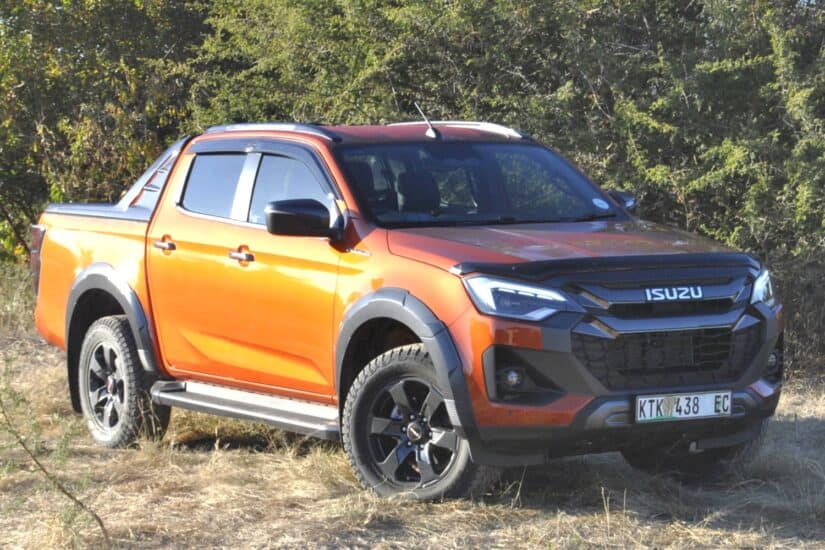
Facelift D-Max has finally arrived after an almost three year long wait. Picture: Charl Bosch


The facelift Isuzu D-Max has been a long time coming as it officially went on-sale in its de facto home market of Thailand three years ago.
Why the long wait?
Late arriving on South African soil due to what is referred to as a “freeze” timeframe from principle production to complete knockdown (CKD) assembly in other markets, the three-year wait hasn’t been as making light adjustments for the local market.
Instead, Isuzu’s localisation programme means the South African-made D-Max is different in 12 key areas compared to the Thai model.
These include:
- new and stronger body and doors;
- a loadbox made from thicker steel;
- tailgate optimised for heavier loads;
- new rear axle;
- retuned suspension;
- uprated chassis and frame;
- improved cooling and electrical systems;
- market specific brakes;
- powertrain tuning;
- new heating, ventilation and air-conditioning system;
- different security system;
- powertrain tuned for local conditions
In addition, the D-Max has undergone 400 000 km of testing over various terrains and conditions, not only for South Africa, but also export markets in Sub-Sahara Africa.
A process that takes three years, the internally named RG D-Max is, therefore, almost market specific compared to the visually identical revised Thai example.
Cross border unveiling
Entering its fourth year of local production after being delayed due to the global pandemic, the local launch involved a cross border unveiling in Botswana.
Centring around Kasane on the banks of the Chobe River, and not far from the Zimbabwean border – a key export market for Isuzu along with Zambia – the mostly gravel-bound route identified more than a few areas of immediate improvements.
More variants
A line-up spanning 33 derivatives, the facelift D-Max retains the same three bodystyles options as before. However, more emphasis has been placed on the single and Extended Cab.
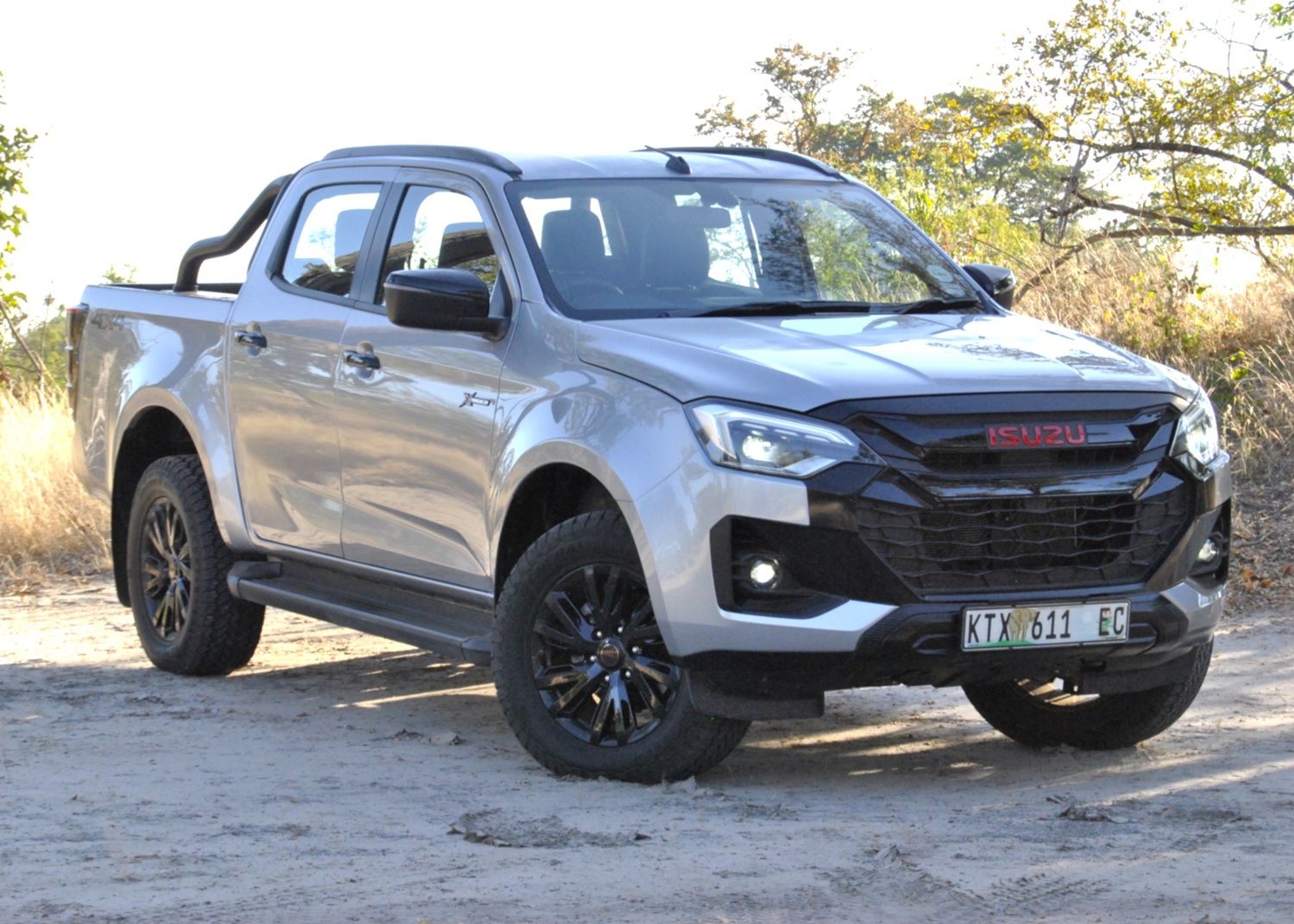
As such, more variants have added, with the Extended Cab in particular gaining three new models and the single cab two.
On the double cab, the smash-hit X-Rider has once again been made available with the 3.0-litre turbodiesel engine last offered on the previous generation D-Max as a limited edition model.
New, visually
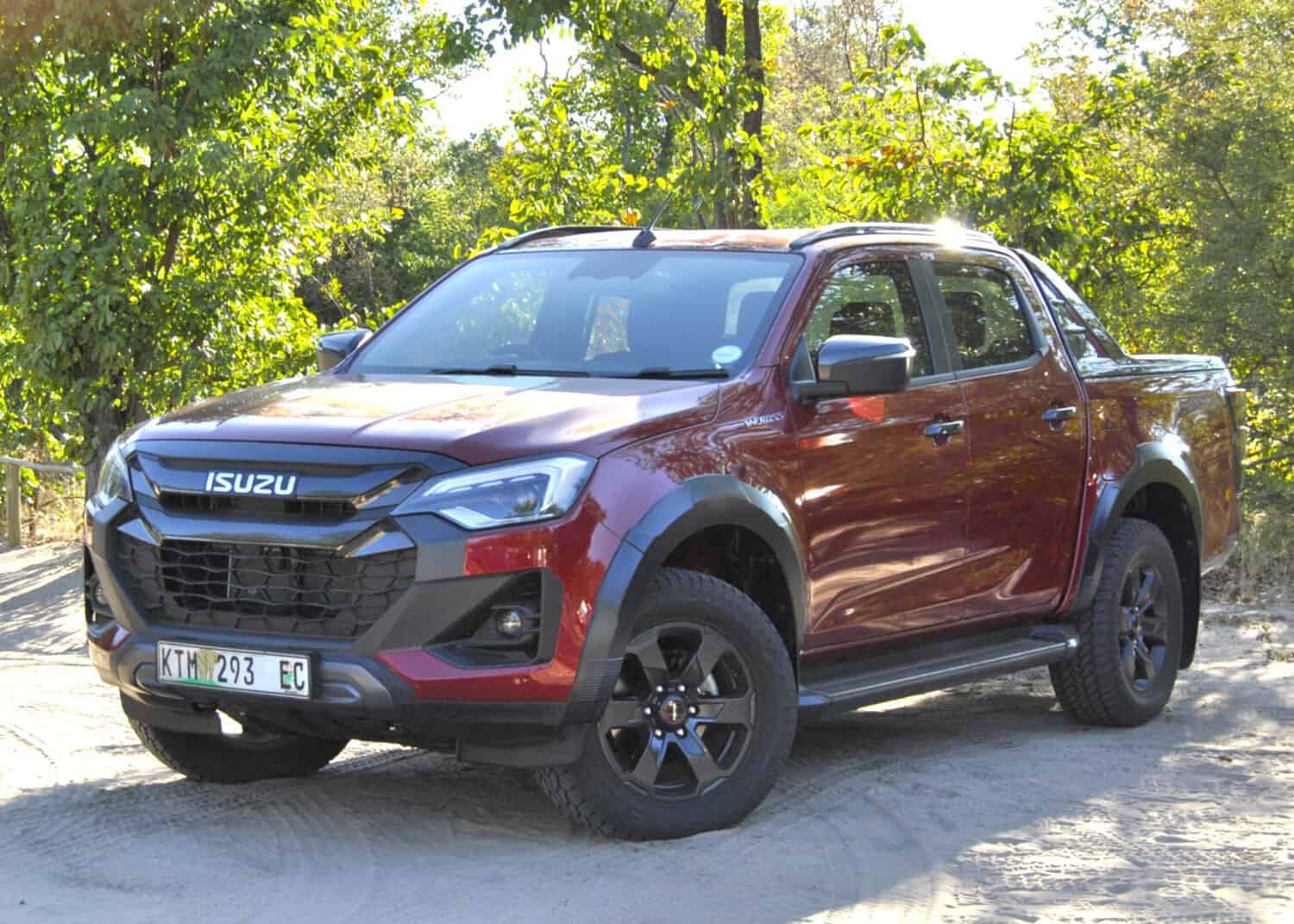
Globally revealed seven years ago, the D-Max’s reworked aesthetic comprises a new grille and headlights, new fog light bezels, a redesigned front bumper and bonnet, and cladding for the flagship V-Cross.
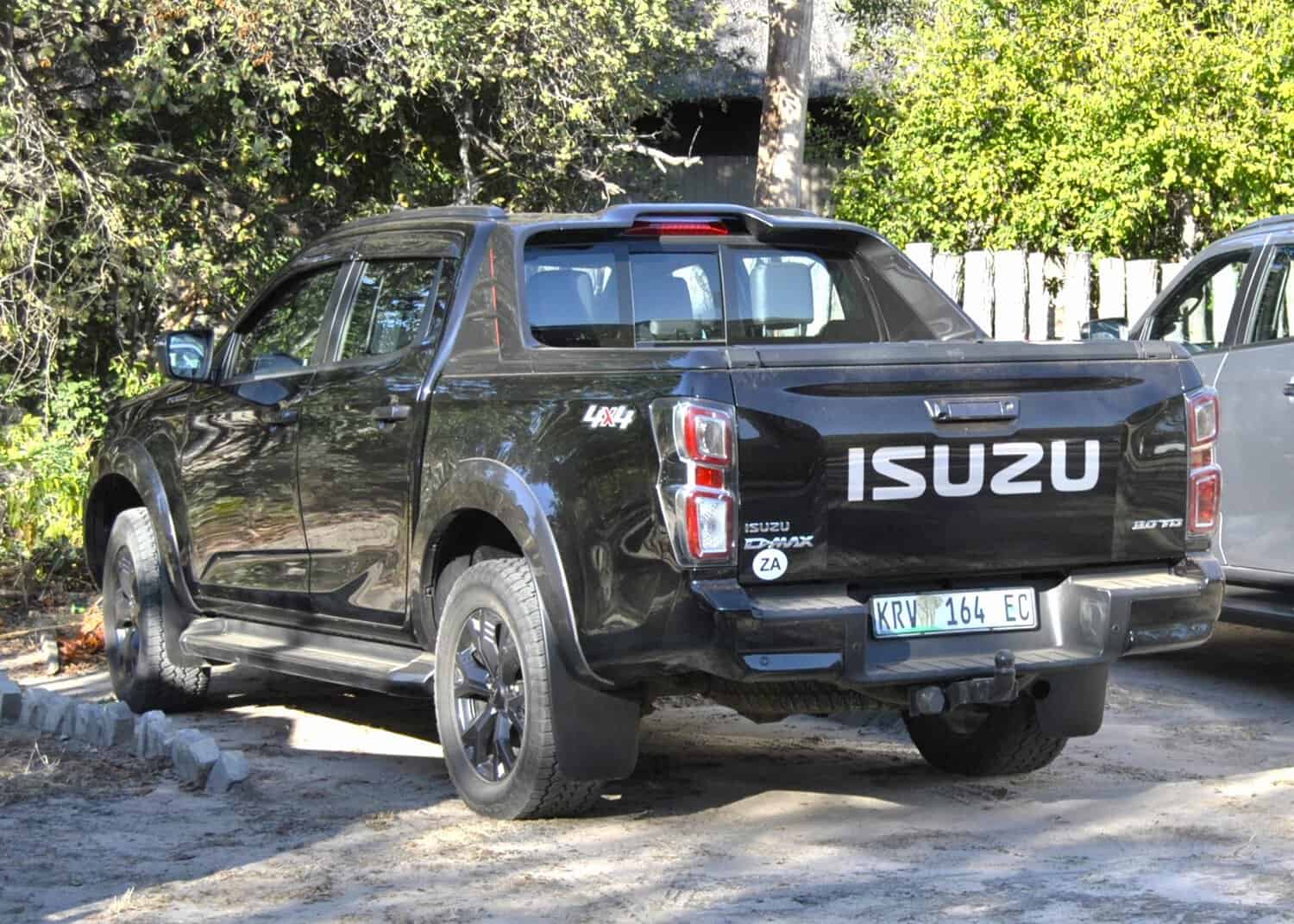
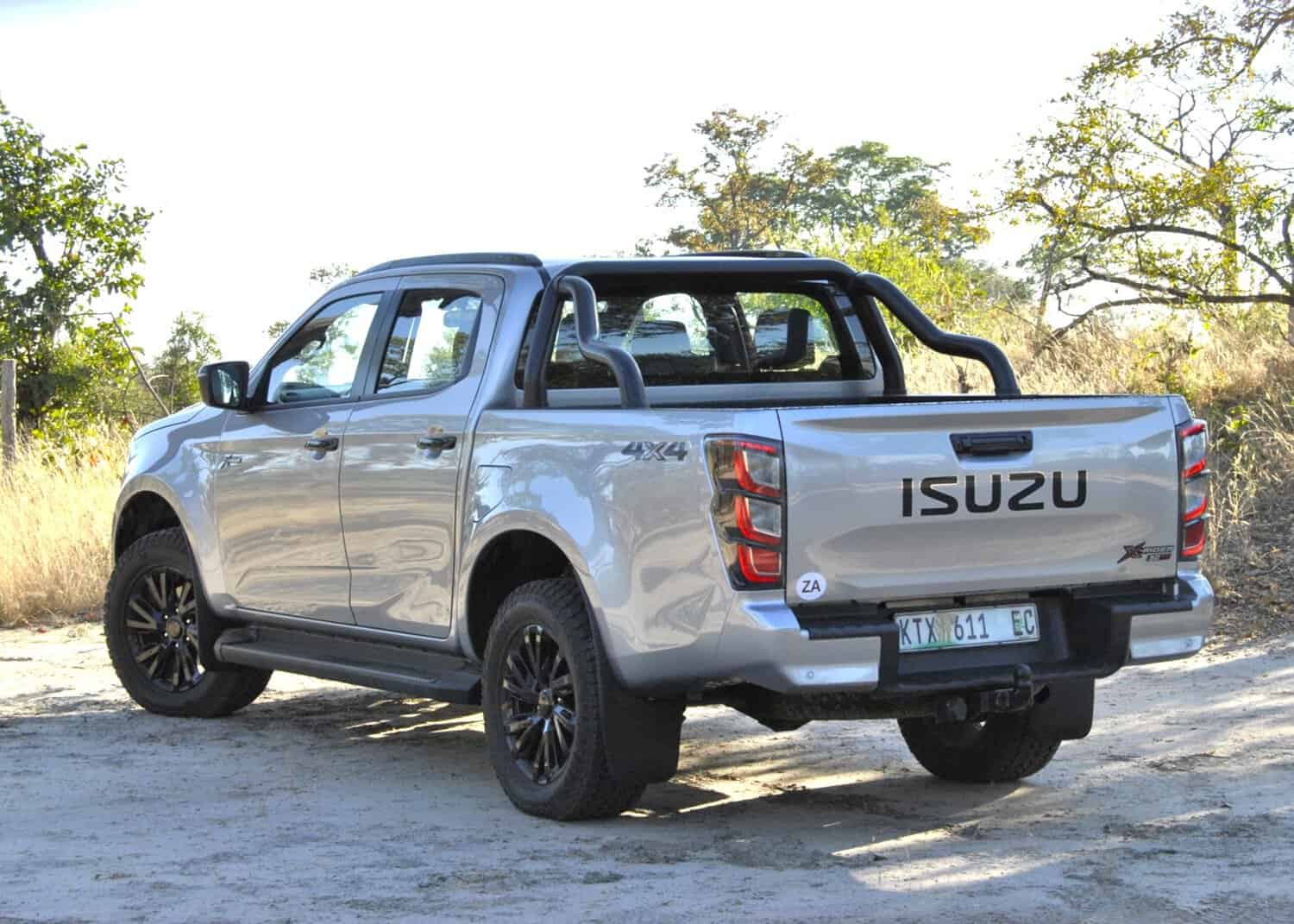
At the rear, the light clusters feature what Isuzu calls a three-tier L-motif, while the actual “Isuzu D-Max” lettered badge has also been refreshed.
Also new is the “spoiler” positioned on top of the tailgate, the bumper and the tailgate itself.
Trim levels
As before, five trim levels are offered; an unbadged base grade reserved solely for the single cab, L, LS, LSE and the mentioned V-Cross once again reserved for the double cab.
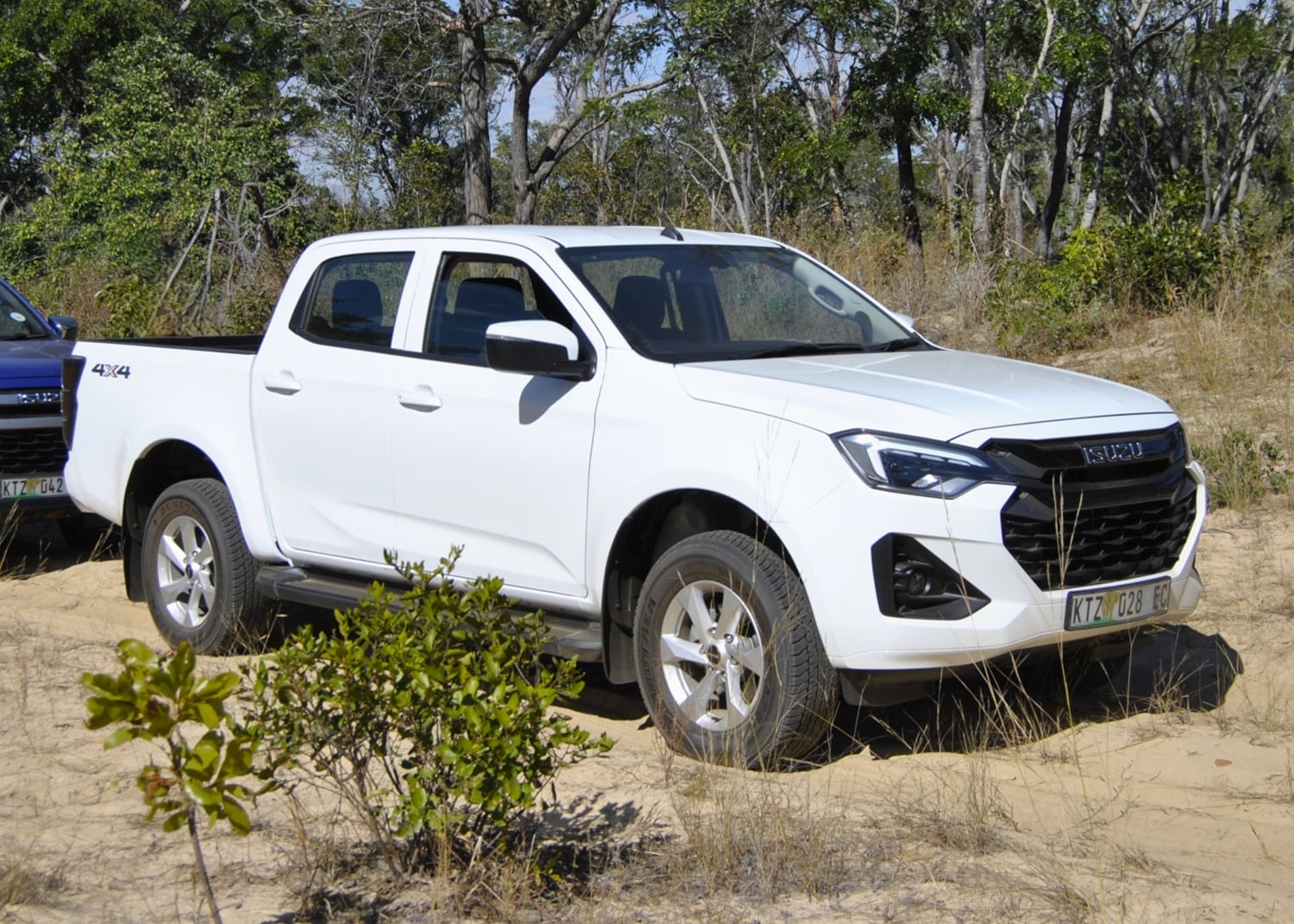
Using the LS as base means the X-Rider slots in between it and the LSE, but with following model specific aesthetic:
- gloss black grille surround;
- red block letter ISUZU badge;
- black mirror caps and side-steps;
- black sports bar;
- black roof rails
- X-Rider badges
- red Isuzu-branded wheel caps
For the base variant, 16-inch steel wheels are standard, which becomes 17-inches on the L. Upgrading to the LS brings 17-inch alloys, with darkened 18-inches reserved for the X-Rider.
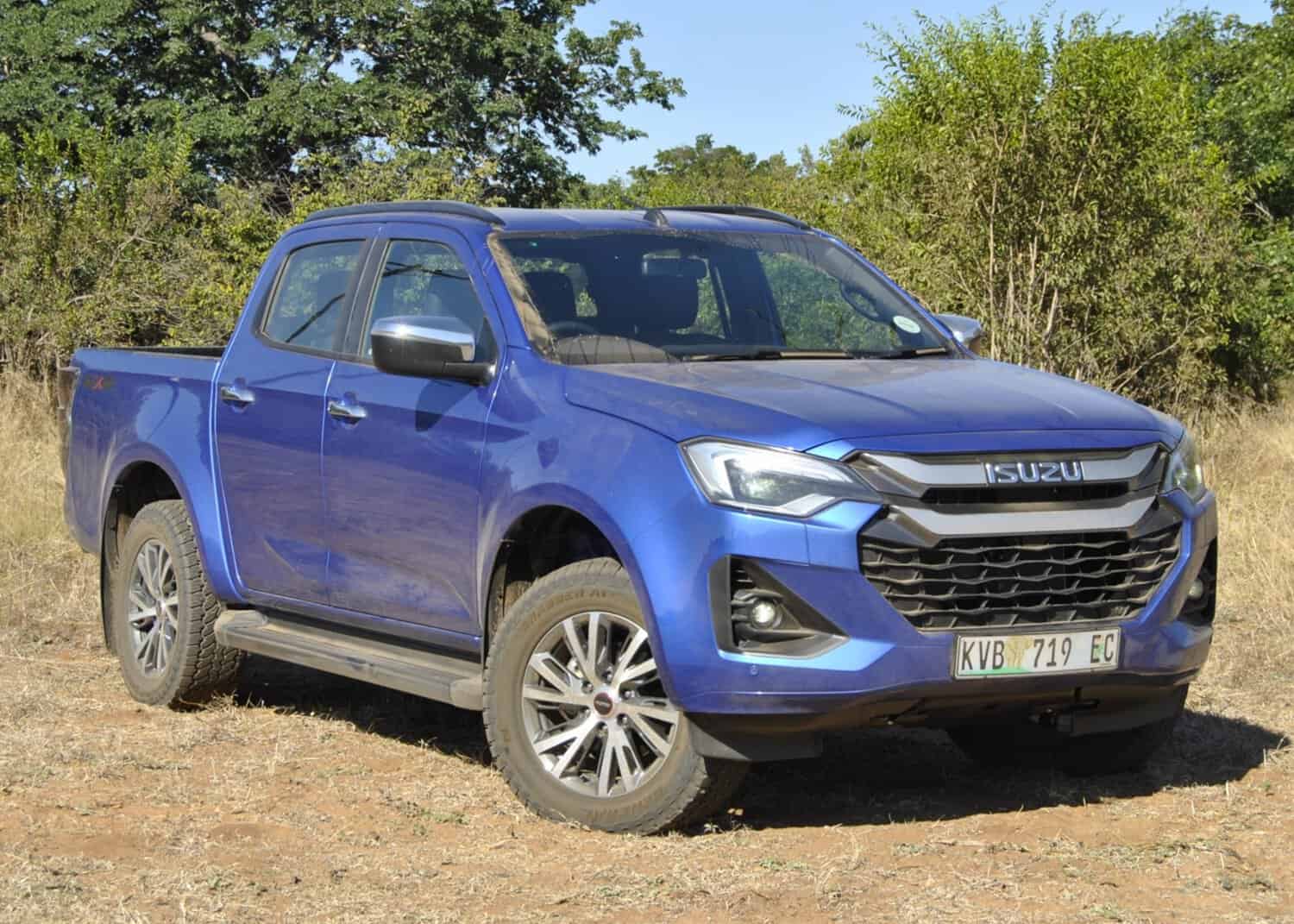
Finally, unique designs feature on the LSE and V-Cross, both with a diameter of 18-inches.
Inside
Stepping inside, the changes are comparatively subtle and an area where the D-Max’s age is starting to show.
Incorporating what Isuzu calls a U-theme across the dashboard, all variant get upgraded materials on the dash and doors, new seat upholstery, an eight-inch infotainment display and type-C USB ports.
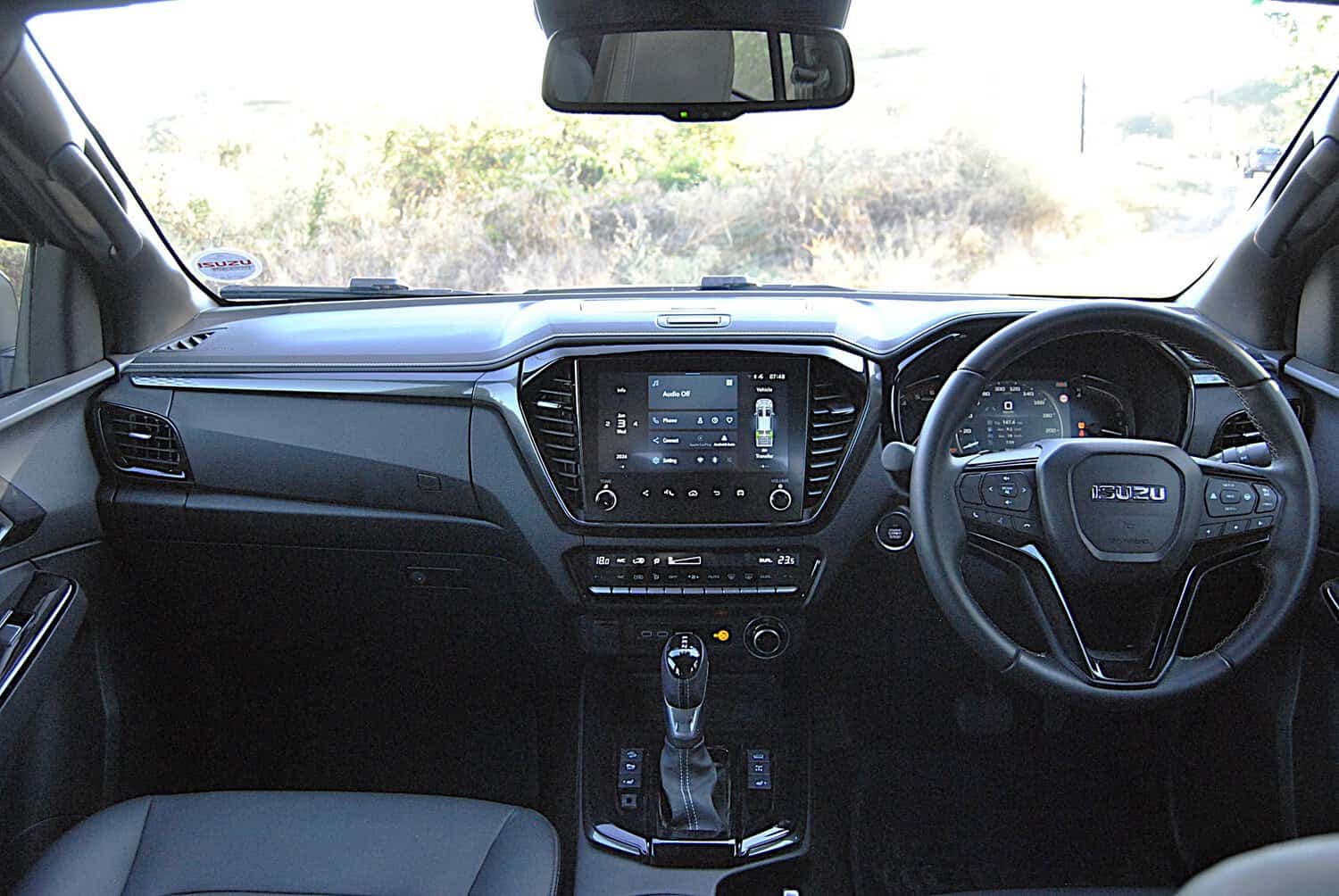
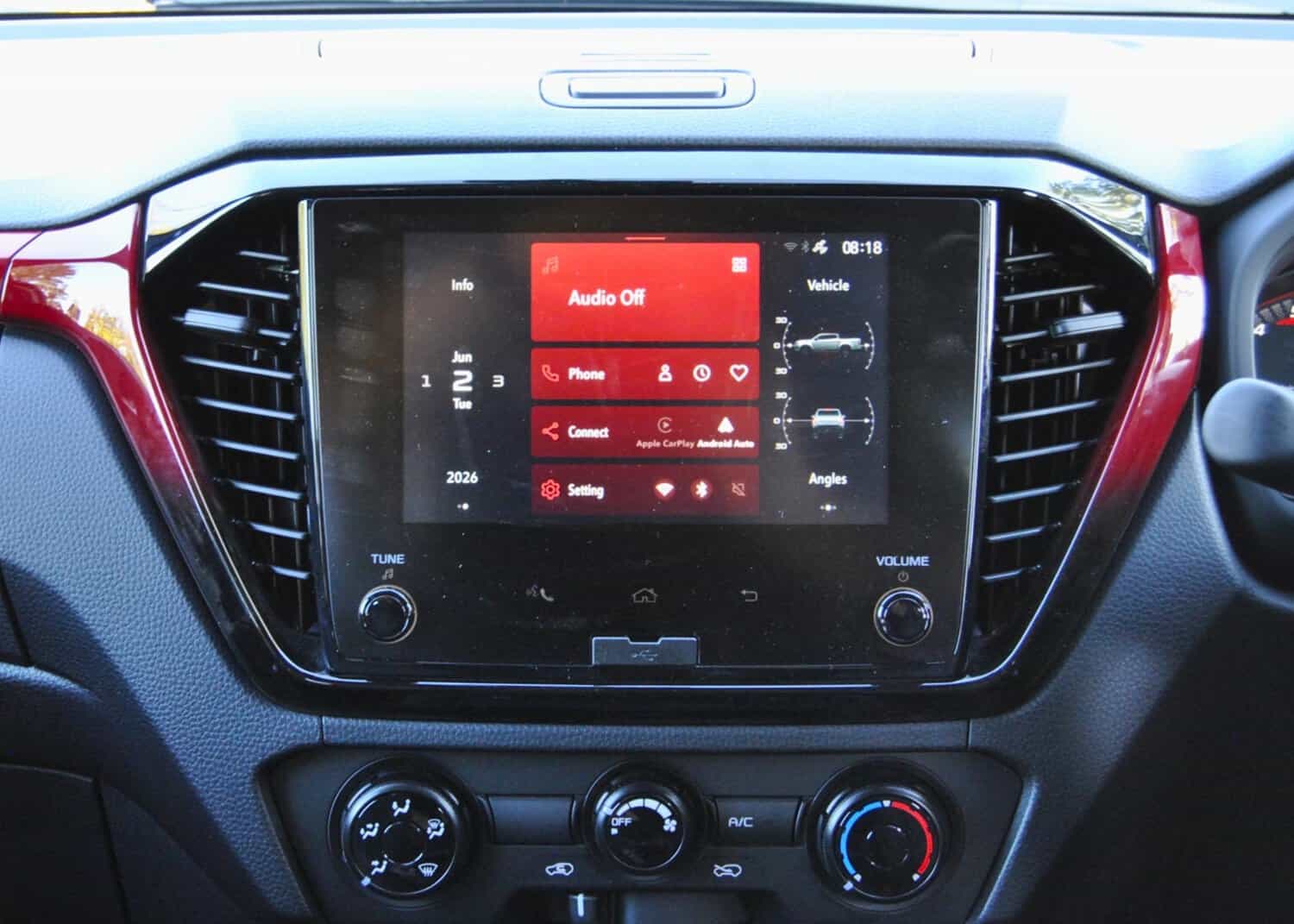
An upgraded eight-inch comes standard on the LS, while the X-Rider, LSE and V-Cross feature a new nine-inch display – all with wireless Apple CarPlay but wired Android Auto.
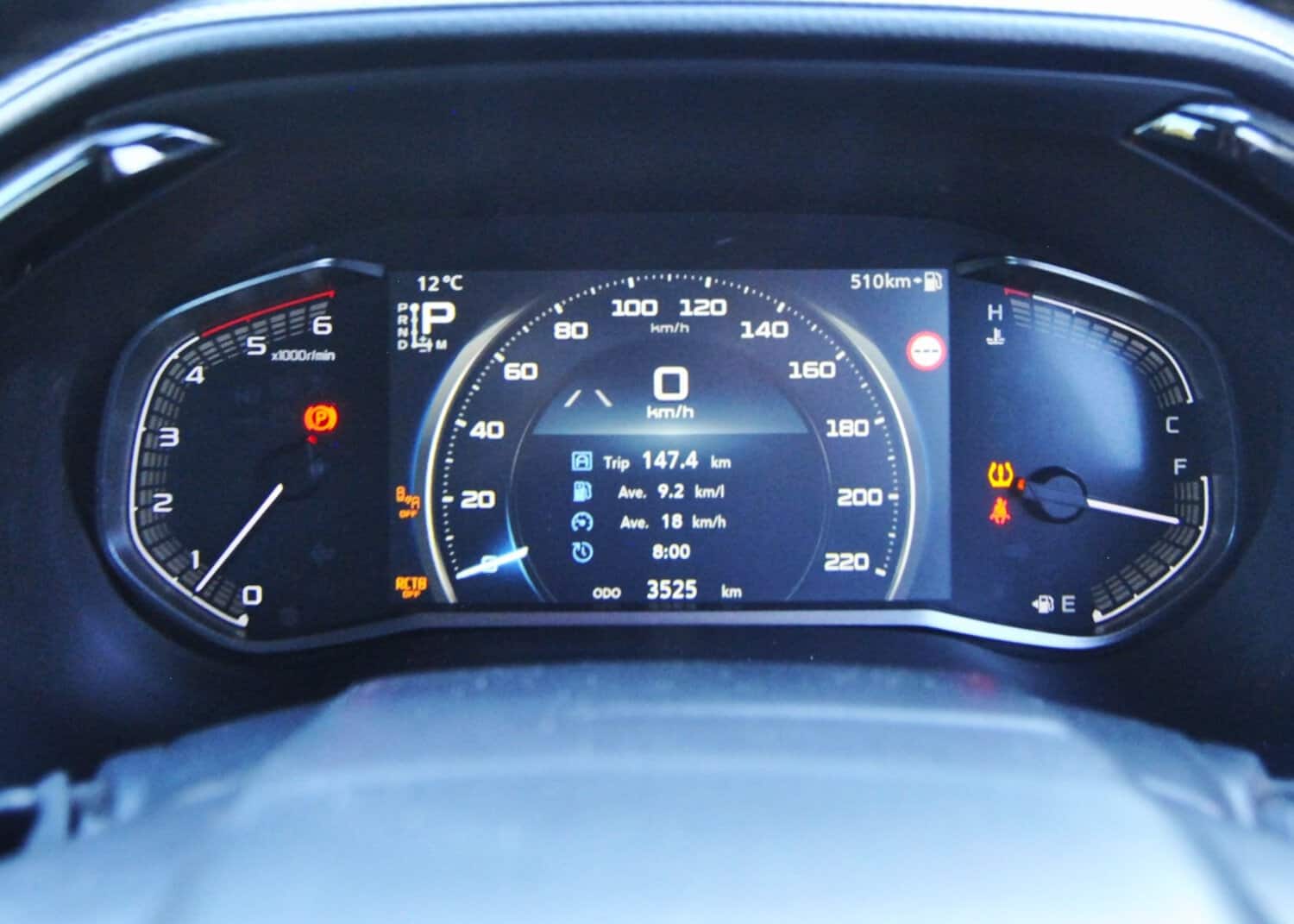
The latter trio also receive a new seven-inch TFT instrument cluster display which replaces the 4.2-inch on the base, L and LS.
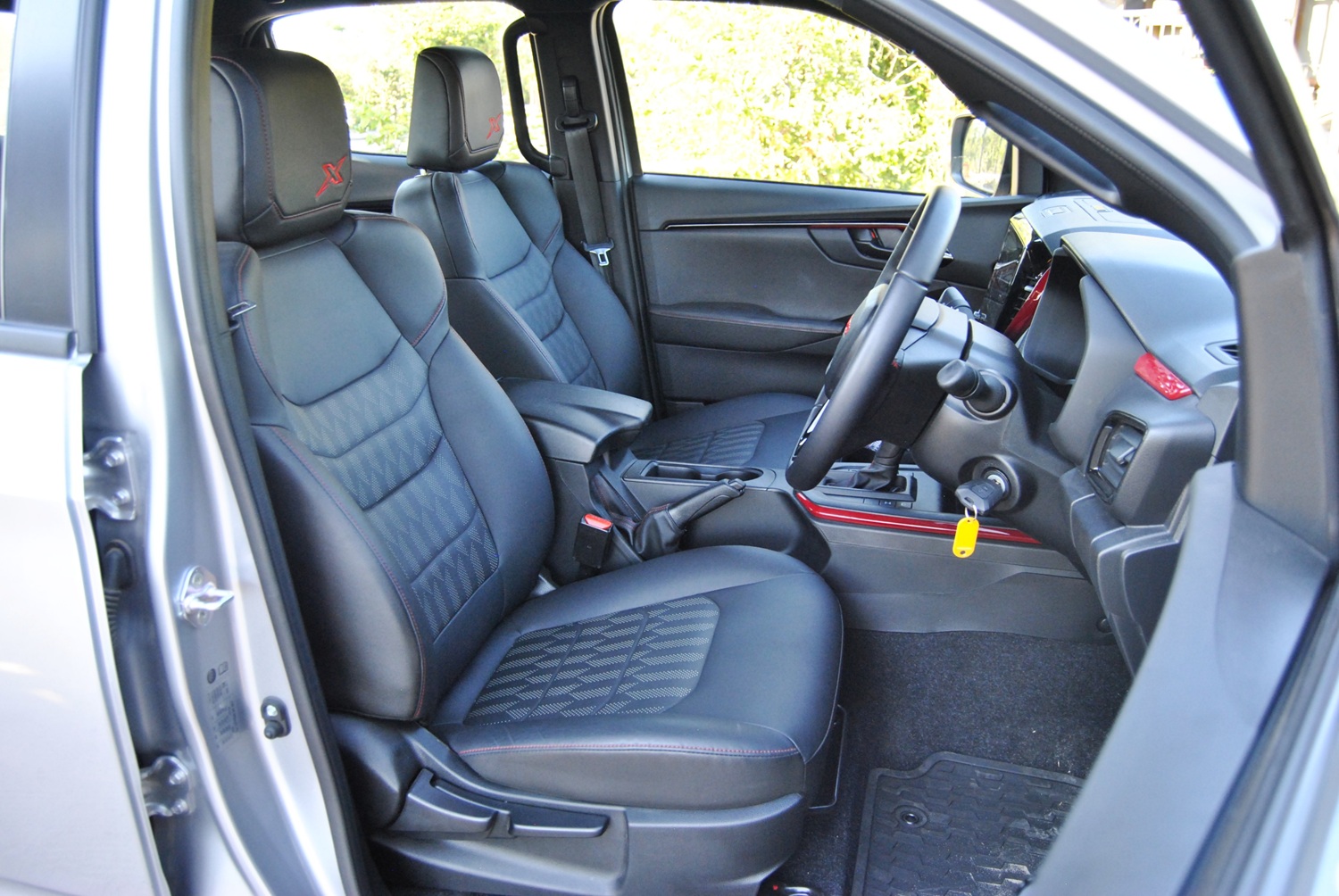
Unique to the X-Rider’s cabin is a fading black to red X decorative insert on a dashboard, X-Rider floor mats and patterned black leather upholstery.
Red stitch work on the seats, a red Isuzu badge on the steering wheel, an embroidered red X on the front seat headrests and red accents around the transmission tunnel section of the centre console round the X-Rider off.
Reserved for the V-Cross is an improved suite of safety and driver assistance systems, plus the first time availability of heated front seats.
Missing, though, is the surround-view camera system available on the D-Max’s SUV sibling, the recently revised MU-X. Plans are, however, being made to make such a system available.
No added power, but improved 1.9
Underneath, Isuzu has kept the D-Max’s dynamics unchanged, but in a surprise move, made extensive revisions to the much criticised RZ4E-TC 1.9-litre turbodiesel engine.
While unchanged on the power and torque fronts, the unit’s upgrades involve a larger and newer turbocharger, an upgraded Engine Computer Unit, increased fuel pressure boost and lowering of the maximum torque revs by 300 rpm to 1 500 rpm.
At the same, throttle response has been improved, the combustion chamber itself redesigned and the ratios for the six-speed automatic gearbox altered.
Still producing 110kW/350Nm, the engine remains the base option as the new 2.2-litre RZ4F remains off the table due to South Africa’s poor fuel quality.
Isuzu has, however, indicated that local testing has started and that the unit will become available once comparability is sorted out.
The flagship 4JJ3-TCX 3.0-litre DDI engines continues without change and still punches out 140kW/450Nm.
Depending on the trim grade and model, all D-Maxs are equipped with either a six-speed manual gearbox or a six-speed automatic, which has been augmented with paddle shifters on the V-Cross only.
4WD get rougher
New on four-wheel drive versions is the Rough Terrain mode that functions as a front diff-lock.
Working with the standard rear locker, system is said to improve grip, response and traction, and can be selected in either 2H, 4H or 4L.
The drive
As mentioned, the three-day launch around Kasane involved short sections of tar, as well as the Hunter Route that formed part of the erstwhile ivory trading route between Botswana and Zimbabwe.
While able to sample the LS, X-Rider, LSE and V-Cross variants of the double cab, the revisions to the 1.9 made the biggest impression.
Considerably perkier and more responsive than before, the previous initial lag and lack of urge no longer persist to the point where the unit feels nearly on par with the 3.0-litre in terms of power delivery.
That being said, the latter doesn’t play second fiddle and still pulls as strong as ever. However, the same revisions to the gearbox as in the 1.9 would have paid dividends.
While the drive along the route failed to exceed 50 km/h, opting to drop back within the convoy and then booting it revealed the engine’s improvement, as well as that of the transmission.
Sampling both new displays is more mixed as Isuzu has, thankfully, now incorporated physical dials for the audio tuner and volume.
Gone, though, is the physical buttons on the outer edge of the screen replaced by a trio of touch-sensitive at its base.
A trifle easier to use than before, both also feature readouts for amongst others, tyre pressures where a monitoring system is fitted, an inclinometer, vehicle angle and to which wheels power is being sent.
Still, however, dated when compared to the Ford SYNC 4A system, interior comfort is still good, though the steering was found to be heavy on both the LSE and V-Cross, but not the LS or X-Rider.
Offering 227 mm of ground clearance across all models, the D-Max never bottomed out on the Hunter Route – the ride, admittedly with deflated pressures to 1.-bar, feeling composed and better sorted off-road than on-road.
Conclusion
March represented a high point for D-Max sales, with 3 008 units being moved, a record that made the Isuzu the nation’s second best-selling bakkie behind the outgoing Toyota Hilux and ahead of the Ranger.
While this has since tampered off in readiness for the facelift model, the D-Max isn’t the revolution some would have expected it to be.
Its advancing age telling inside, it remains a capable all-rounder with a loyal fanbase, proven reputation and, in the case of the 1.9, now seriously worth considering.
Price
Standard across all models’ price tags is a five-year/120 000 km warranty and a five-year/90 000 km service plan.
Single Cab
- D-Max 1.9 Low-Ride – R433 860
- D-Max 1.9 High-Ride – R463 860
- D-Max 1.9 HR L – R483 650
- D-Max 1.9 HR L 4×4 – R585 200
- D-Max 1.9 HR L AT – R502 230
- D-Max 1.9 HR L 4×4 AT – R603 600
- D-Max 3.0 HR L 4×4 AT – R689 090
Extended Cab
- D-Max 1.9 L – R533 690
- D-Max 1.9 L 4×4 – R583 690
- D-Max 1.9 L AT – R553 690
- D-Max 1.9 LS – R561 190
- D-Max 1.9 LS AT – R584 340
- D-Max 1.9 LS 4×4 AT – R634 340
- D-Max 3.0 LSE AT – R700 760
- D-Max 3.0 LSE 4×4 AT – R785 720
Double Cab
- D-Max 1.9 L – R574 010
- D-Max 1.9 L 4×4 – R670 800
- D-Max 1.9 L AT – R593 880
- D-Max 1.9 LS – R611 730
- D-Max 1.9 LS AT – R633 290
- D-Max 1.9 LS 4×4 AT – R717 700
- D-Max 3.0 LS 4×4 – R791 200
- D-Max 3.0 LS 4×4 AT – R810 960
- D-Max 1.9 X-Rider – R668 900
- D-Max 1.9 X-Rider AT – R690 810
- D-Max 1.9 X-Rider 4×4 AT – R776 890
- D-Max 3.0 X-Rider AT – R792 470
- D-Max 3.0 X-Rider 4×4 AT – R844 470
- D-Max 3.0 LSE AT – R850 880
- D-Max 3.0 LSE 4×4 AT – R900 310
- D-Max 3.0 V-Cross AT – R898 380
- D-Max 3.0 V-Cross 4×4 AT – R948 930



