



Women remain the backbone of South Africa's care economy exposing the unequal burden on them.
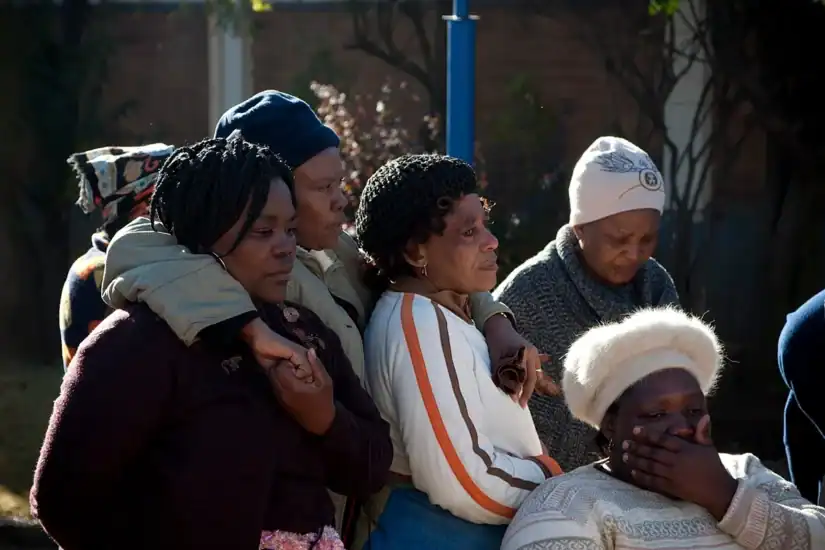
Image used for illustrative purposes. Picture: Gallo Images/Daniel Born


For many South African women, the working day begins long before they report for paid employment and ends long after they return home.
They prepare meals, clean homes, care for children and support relatives who are elderly, ill or living with disabilities. Many also work in jobs that provide care to others – as nurses, teachers, domestic workers, social workers and community health workers.
A new report by Statistics South Africa shows that this work remains deeply shaped by gender.
Although care work sustains families, supports the economy and enables other people to work and study, women continue to shoulder most of it – often without pay and with little recognition.
The report, Gender Disparities in Care Work in South Africa, examines care work through household, education, employment, income and service-access data.
Stats SA warns that much unpaid care remains invisible because South Africa does not have recent time-use data to measure exactly how many hours people spend on domestic and caregiving responsibilities.
Care work keeps households going
Care work is more than looking after children. Stats SA defines it as the paid and unpaid activities includes nursing, teaching, social work, childcare and domestic work, as well as cooking, cleaning, collecting water and caring for family members.
Some of this work takes place in hospitals, schools and formal workplaces. Much of it happens quietly inside homes.
Despite this contribution, unpaid care is generally excluded from conventional measures of economic activity, such as gross domestic product.
Women carry the heavier load on their backs
The report identifies women as the main providers of unpaid care in South Africa.
Female-headed households were more likely to include larger numbers of children and to form part of extended or multigenerational households.
In 2025, women headed 68% of households with five or more minor children, up from 63.1% in 2015. The pattern was particularly stark in non-urban areas, where women headed 72.1% of households with five or more children in 2025.
Female-headed households were also more likely to have no employed household member. The proportion stood at 39.1% in 2025, compared with 23.5% among male-headed households.
The report says this unequal distribution of care can limit women’s ability to find work, accept full-time jobs, attend training or pursue business opportunities. It can also interrupt education and reduce women’s earnings and retirement savings over their lifetimes.
Care needs are growing
South Africa’s care needs are changing as the population ages. The proportion of people aged 65 and older increased from 5.9% of the population in 2015 to 7.3% in 2026.
Over the same period, the old-age dependency ratio increased from 7.9 to 9.1 older people for every 100 working-age people. Stats SA says this points to a growing need for long-term care, healthcare and social support.
Children continue to create a major demand for care, even though the child dependency ratio declined from 45.4 in 2015 to 41.1 in 2025.
It is common to find South African families who meet these needs through relatives and community networks.
Jobs and pay still split by gender
Care work does not only happen without pay. It is also a significant source of employment, but women remain concentrated in many of the sector’s lower-paid and less secure occupations.
In 2026, women accounted for 93.6% of domestic workers and 94% of pre-primary teachers. They also made up 87.2% of nursing and midwifery workers and 91.9% of social work associate professionals.
This concentration reflects long-standing social expectations that link caregiving to women’s traditional roles. It also creates a double burden: women are more likely to perform unpaid care at home while earning a living in paid care jobs.
Women’s earnings have improved, but the gap with men remains. In 2024, women’s median monthly earnings were about 82% of men’s, according to the report. Stats SA says this shows that gender inequality persists even in a sector where women form the majority of workers.
Grants and household spending
For households carrying heavy care responsibilities, income often determines whether they can buy support or must rely on unpaid family labour.
Stats SA found that salaries remained the main source of household income between 2015 and 2025. Social grants were the second most common source, and the proportion of households relying mainly on grants increased from 21.1% to 23.4%.
Female-headed households depended more on grants and remittances than male-headed households. The report says grants provide vital support to families caring for children, older people and people with disabilities.
Household spending also reflects unequal access to care. In 2023, male-headed households spent an average of R30 934 a year on domestic services, compared with R21 657 among female-headed households.
The difference suggests that households with fewer financial resources may have less ability to pay for help and may depend more heavily on unpaid care.
Services can ease the burden
When households lack reliable water, electricity, transport, healthcare or childcare, someone must fill the gap. In many cases, that someone is a woman.
In 2025, 79.6% of male-headed households spent less than 30 minutes fetching water, compared with 69.8% of female-headed households.
Stats SA also found that female-headed households were more likely than male-headed households to collect water from sources such as streams or rivers.
Electricity was the main cooking energy source for most households. But the report records continued provincial and geographic differences, including the use of paraffin and coal in some areas.
Public clinics and hospitals remained the most common health facilities used by households in 2025, accounting for 72.8% of use. Non-urban households generally faced longer journeys to healthcare facilities, adding time and pressure to the unpaid care work carried out at home.
The Stats SA report says South Africa needs to “recognise, reduce, and redistribute unpaid care work”, improve conditions for paid care workers and invest in accessible, quality care services.
Without those changes, the country’s care system will continue to depend on work that women perform often invisibly and without adequate support.



