bZ4X has been a long time waiting, however, it has warranted the wait in a dramatic way.
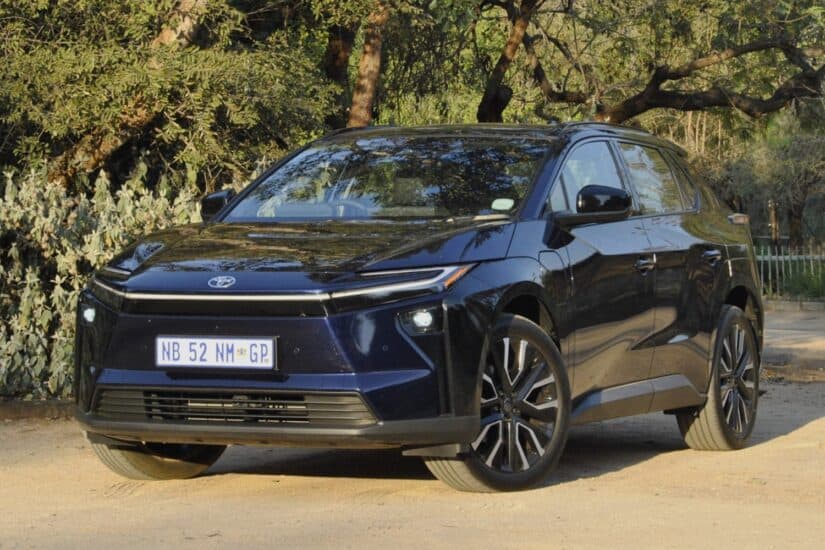
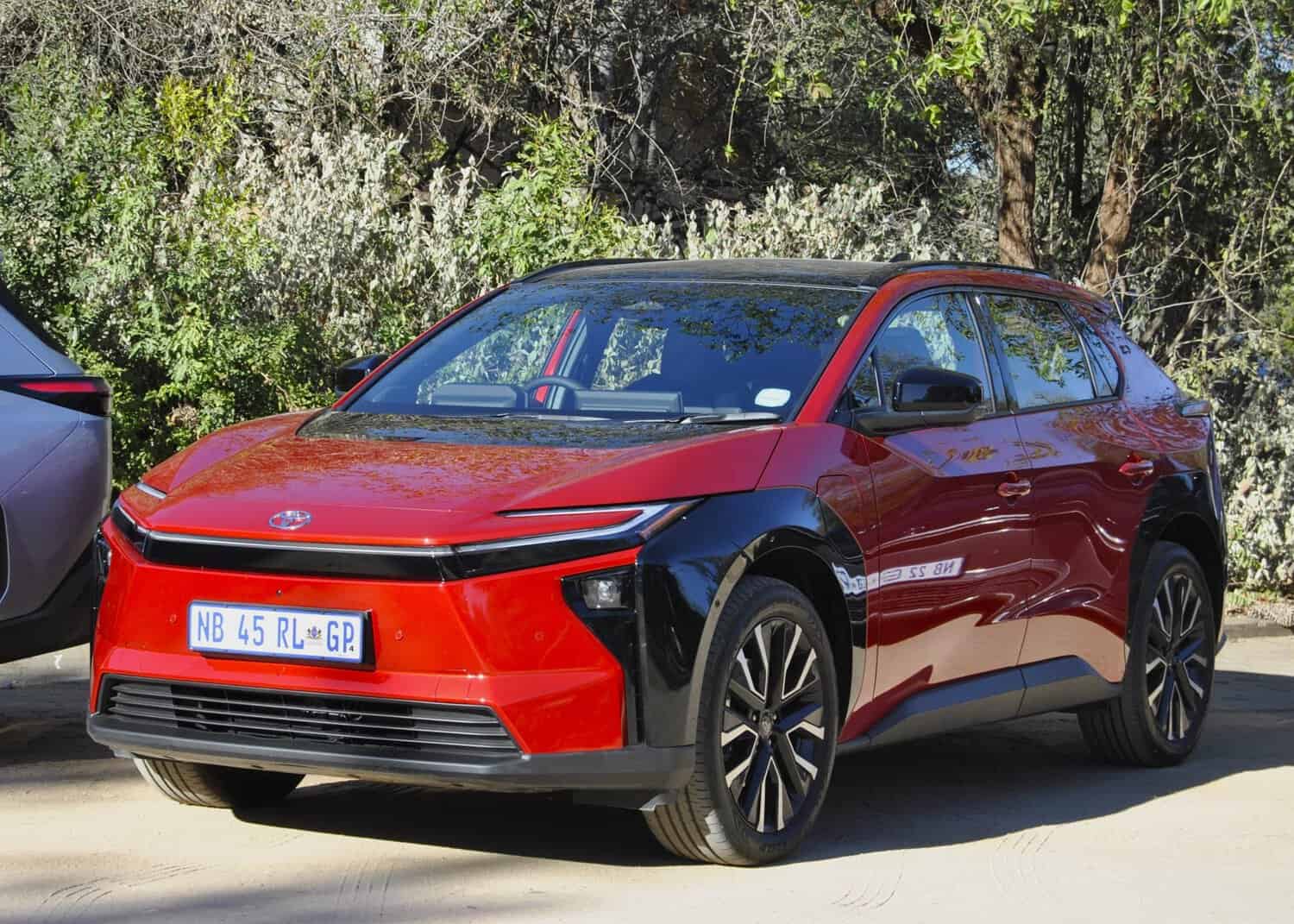
bZ4X has finally arrived in South Africa as Toyota’s first electric vehicle. Picture: Charl Bosch


The Toyota bZ4X has been a long time coming for South Africa as the brand’s first purely electric vehicle.
Why the wait?
Globally revealed five years ago, the bZ4X was supposed to go on-sale in 2023, but received the thumbs down after the infamous recall of nearly 3 000 units due to improperly fitted hub bolts that saw its wheels literally come off.
A predicament that also implicated its twin, the Subaru Solterra, the bZ4X then made a second showing two years ago at Toyota’s State of the Motoring Industry conference, with the view of making it available in 2025.
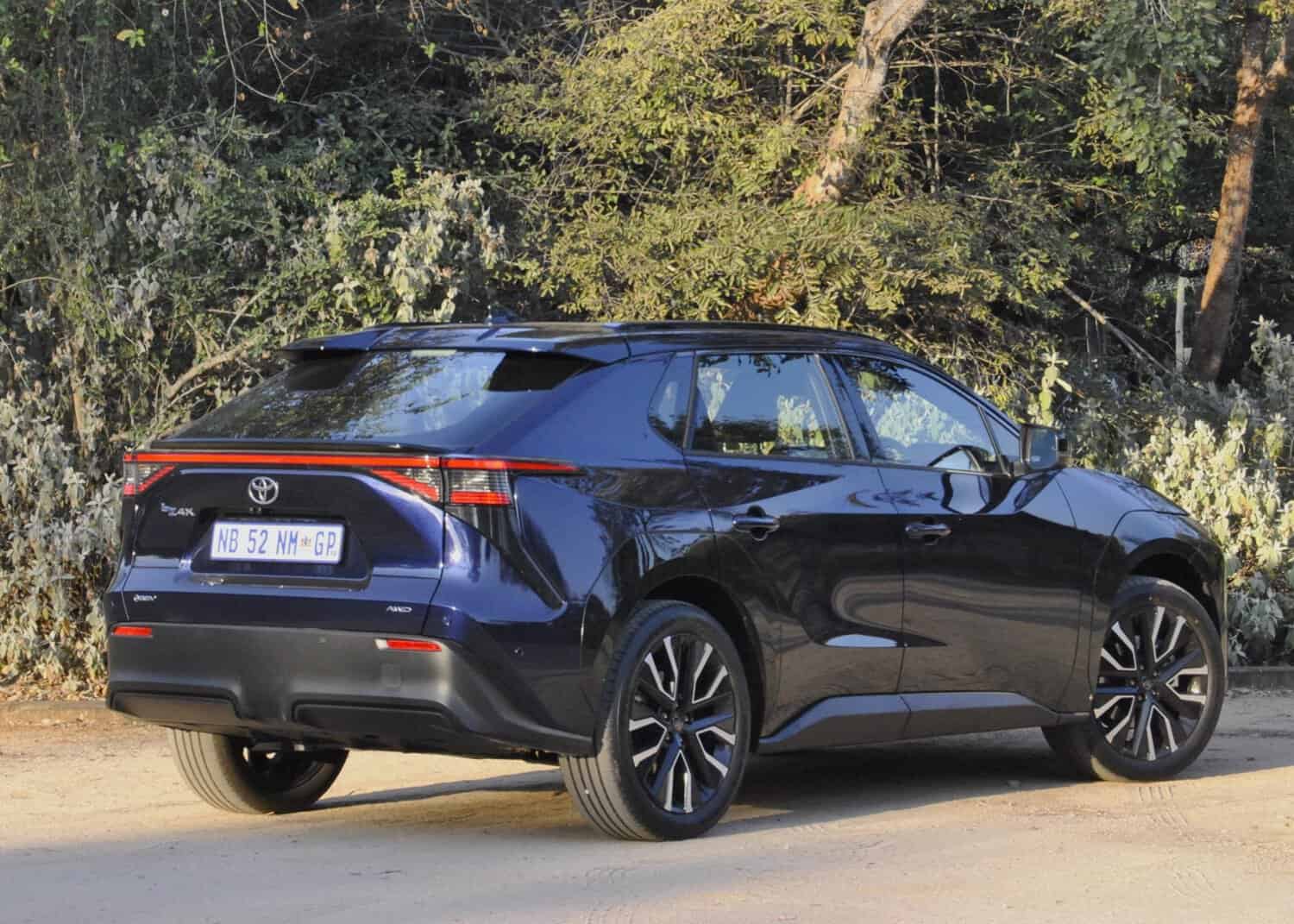
This also didn’t materialise, but for different reasons. Aside from a mid-life update that year, Toyota also fitted a larger battery pack, along with other general revisions.
The trade-off for South Africa is that the bZ4X now comes in its newest form, without any reduction in features or less power than in Europe.
Worth the wait?
Shown again at this year’s State of the Motoring Industry, the bZ4X’s launch in Mpumalanga last week also came with an unexpected surprise in the availability of the Touring station wagon.
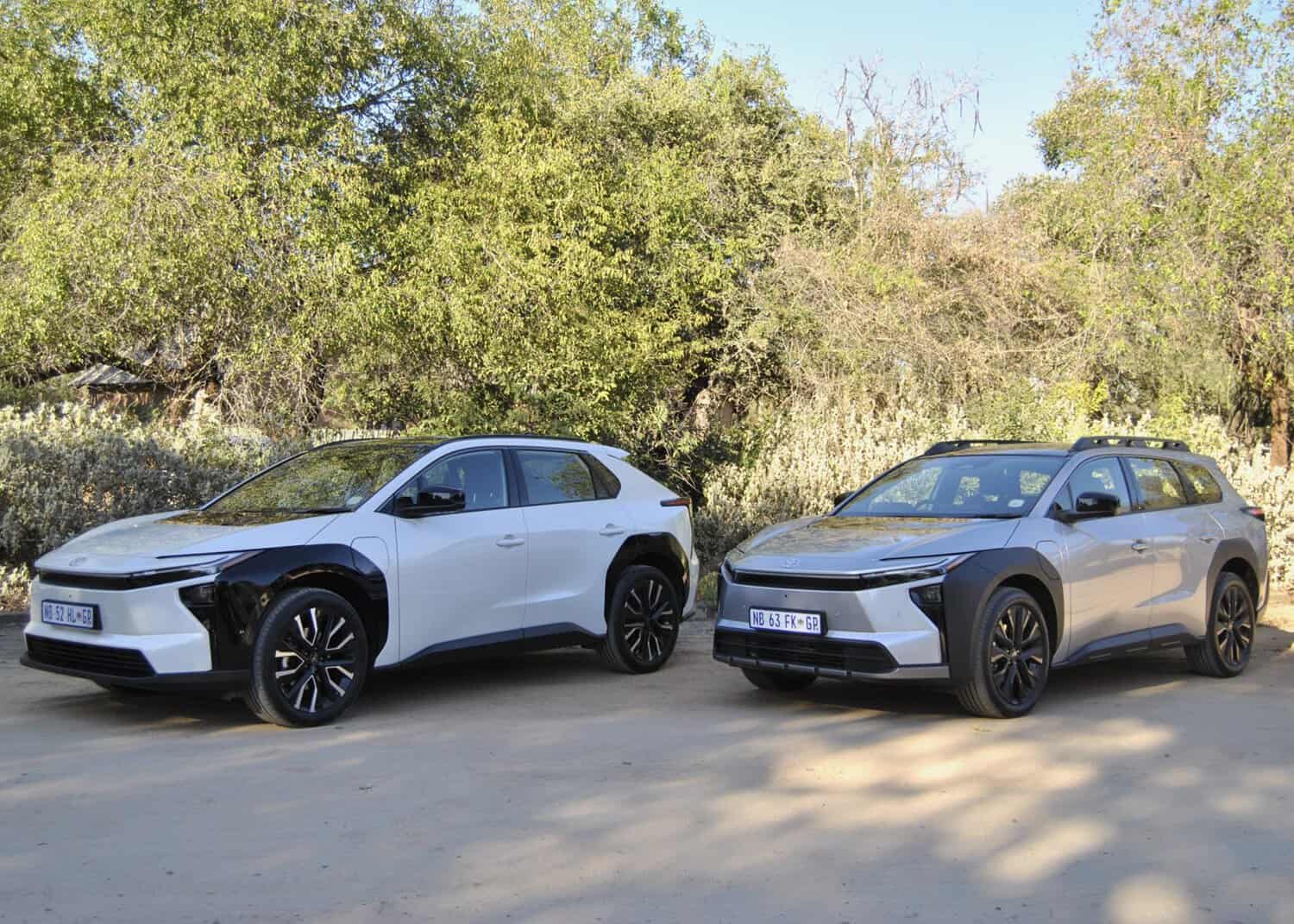
The latter also becoming the fastest accelerating Toyota available in South Africa following the discontinuation of the Supra, the two-day launch in and around Nelspruit proved that the protracted wait had been worth it.
Dimensions
Sharing its EV-dedicated e-TNGA platform with the Solterra, the bZ4X – its naming denoting ‘beyond zero’ for emissions, ‘4’ for segment placing and ‘X’ meaning crossover – the bZ4X has the following dimensions:
- Length: 4 690mm;
- Wheelbase: 2 850mm;
- Height: 1 650mm;
- Width: 1 860mm.
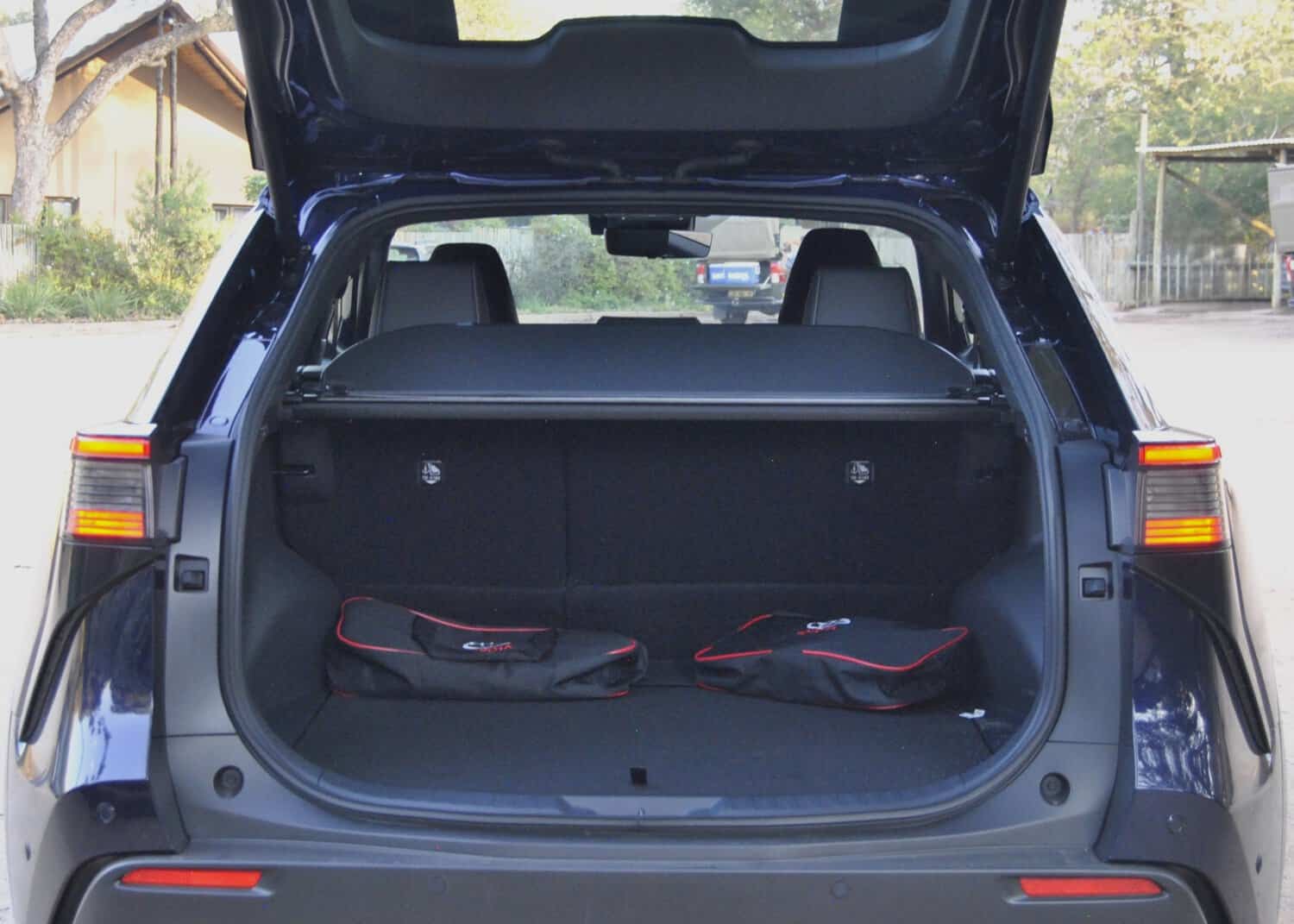
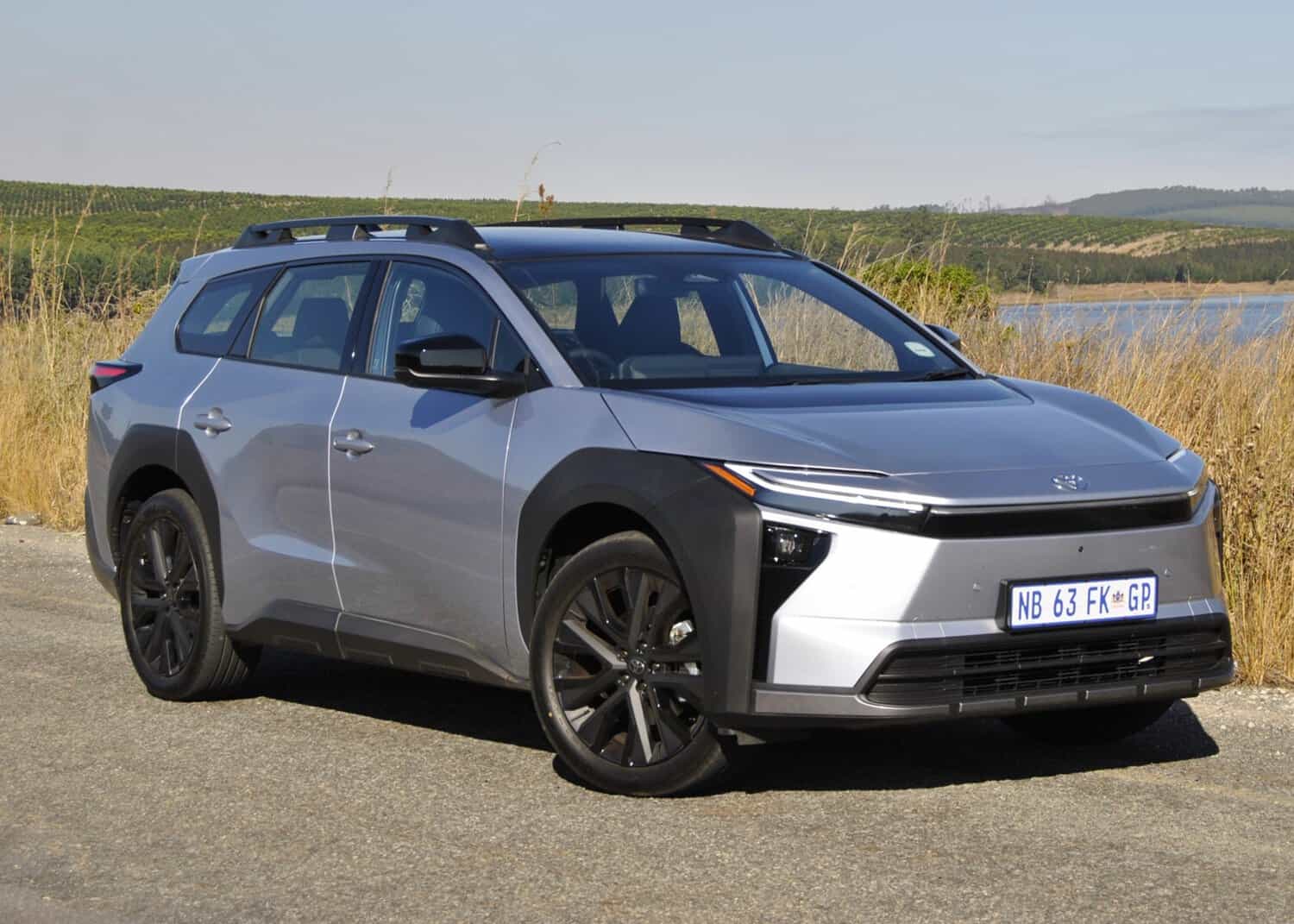
By comparison, the Touring has the same wheelbase and width, but with an increased height of 70mm and overall length to 4 830mm.
Toyota claims a boot space for 452-litres for the “normal” bZ4X and up to 603-litres for the Touring, both measured without the 60/40 split rear seats folded down.
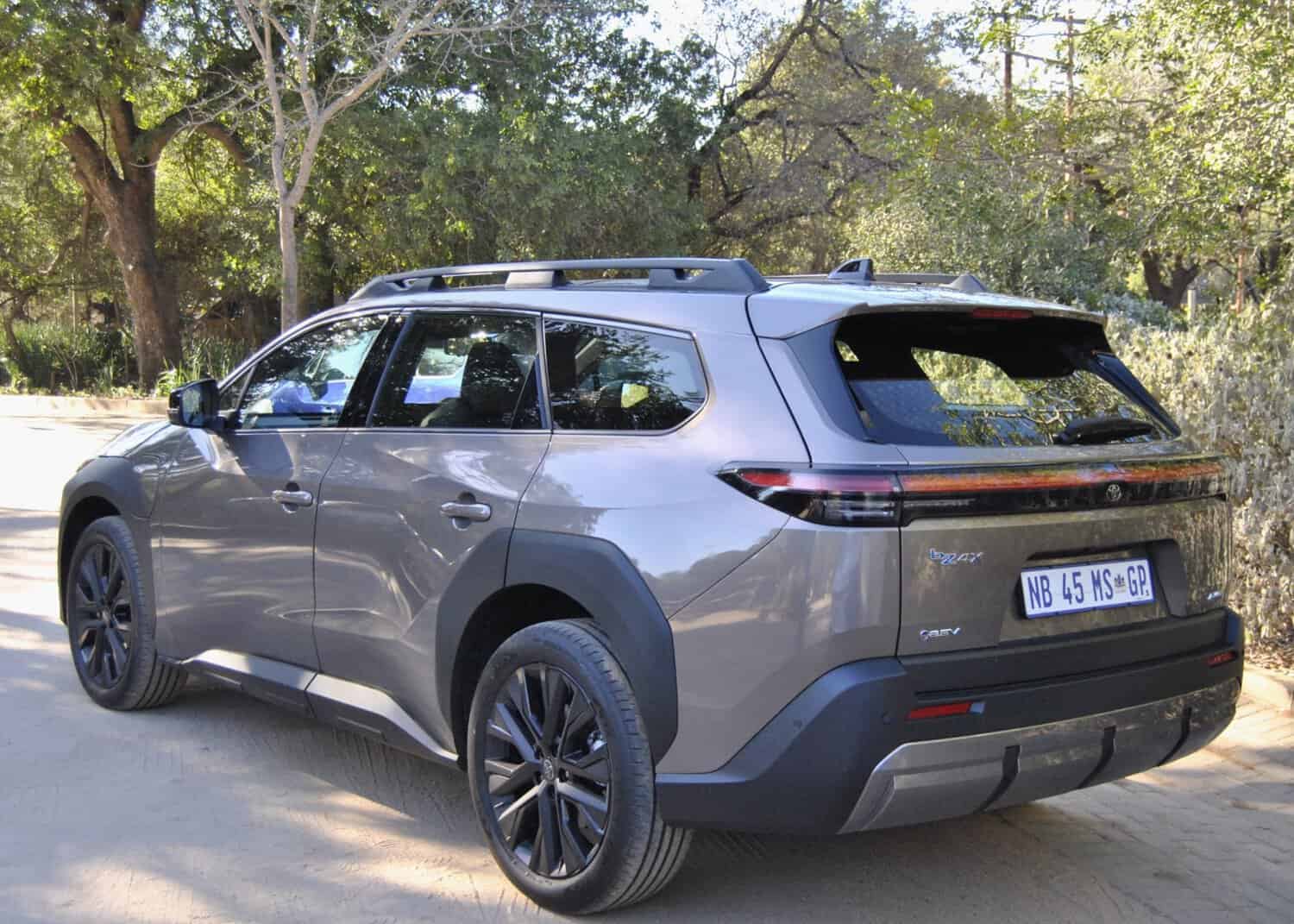
A further difference is the bZ4X having its wheel arches finished gloss black, while in the Touring, these have been replaced by plastic cladding.
Both, though, are equipped with an imitation diffuser and faux satin silver skidplate at the rear.
AWD from the start
It is, however, on the traction side where the key differences emerge. While overseas markets have access to more basic two-wheel drive derivative, South Africa will be privy to the dual-motor all-wheel drive for the foreseeable future.
Its architecture being a 400-volt instead of 800-volt, the bZ4X utilises a 73.1-kWh battery pack that outputs 255kW/338Nm in combined form.
The result is a limited top speed of 160 km/h, 0-100km/h in 5.1 seconds and a range of 481km.
By comparison, the Touring has a 74.7-kWh battery that develops 334kW/438Nm and allows for a range of 487 km. In terms of performance, top speed rises to 180km/h while 0-100km/h drops to 4.3 seconds.
Charging
Supporting DC charging up to 150kW will require a waiting time of 30 minutes, or three hours and 20 min when using the standard 22kW on-board charger.
An additional R15 000 will see a Toyota approved wallbox being installed at wherever the bZ4X is likely to be charged up the most. A GridCar-based top-up charge card also forms part of the final sticker price.
Spec sheet
In terms of spec, Toyota South Africa Motors has settled on a single derivative each for the normal bZ4X and the Touring.
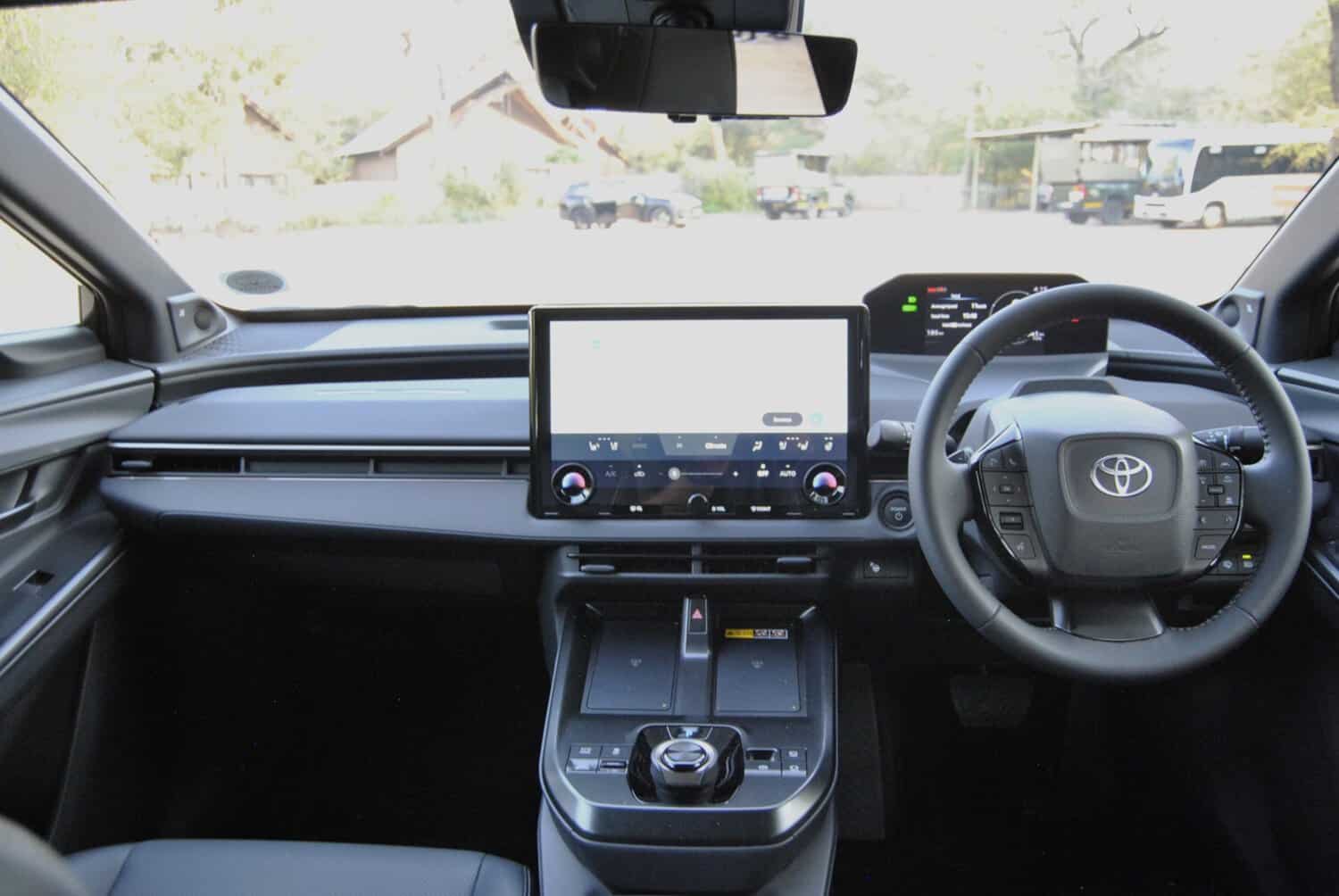
As such, both have the following as standard:
- 20-inch alloy wheels;
- LED headlights;
- folding electric mirrors;
- rain sense wipers;
- roof rails;
- dual-zone climate control;
- keyless entry;
- push-button start;
- heated steering wheel;
- seven-inch digital instrument cluster;
- heated, ventilated and electric front seats;
- memory function for the driver’s chair;
- panoramic sunroof;
- 14-inch infotainment display;
- Apple CarPlay and Android Auto;
- dual wireless smartphone charging pad;
- nine-speaker JBL sound system;
- heated rear seats;
- electric tailgate.
On the safety and driver assistance side, both are outfitted with the following:
- tyre pressure monitor;
- seven airbags;
- front and rear parking sensors;
- surround-view camera system;
- Adaptive Cruise Control;
- Hill Start Assist;
- Automatic Emergency Braking;
- Auto High Beam Assist;
- Downhill Assist Control;
- Emergency Steering Assist;
- Pre-Crash Warning;
- Lane Keep Assist;
- Blind Spot Monitoring;
- Park Assist;
- Lane Tracing;
- Safe Exit Assist;
- Traffic Sign Recognition.
Derived from the Solterra is the so-called X-Mode that has two settings; Snow/Dirt and Deep Snow/Mud. A Grip Control setting for looser than normal surface driving is also included.
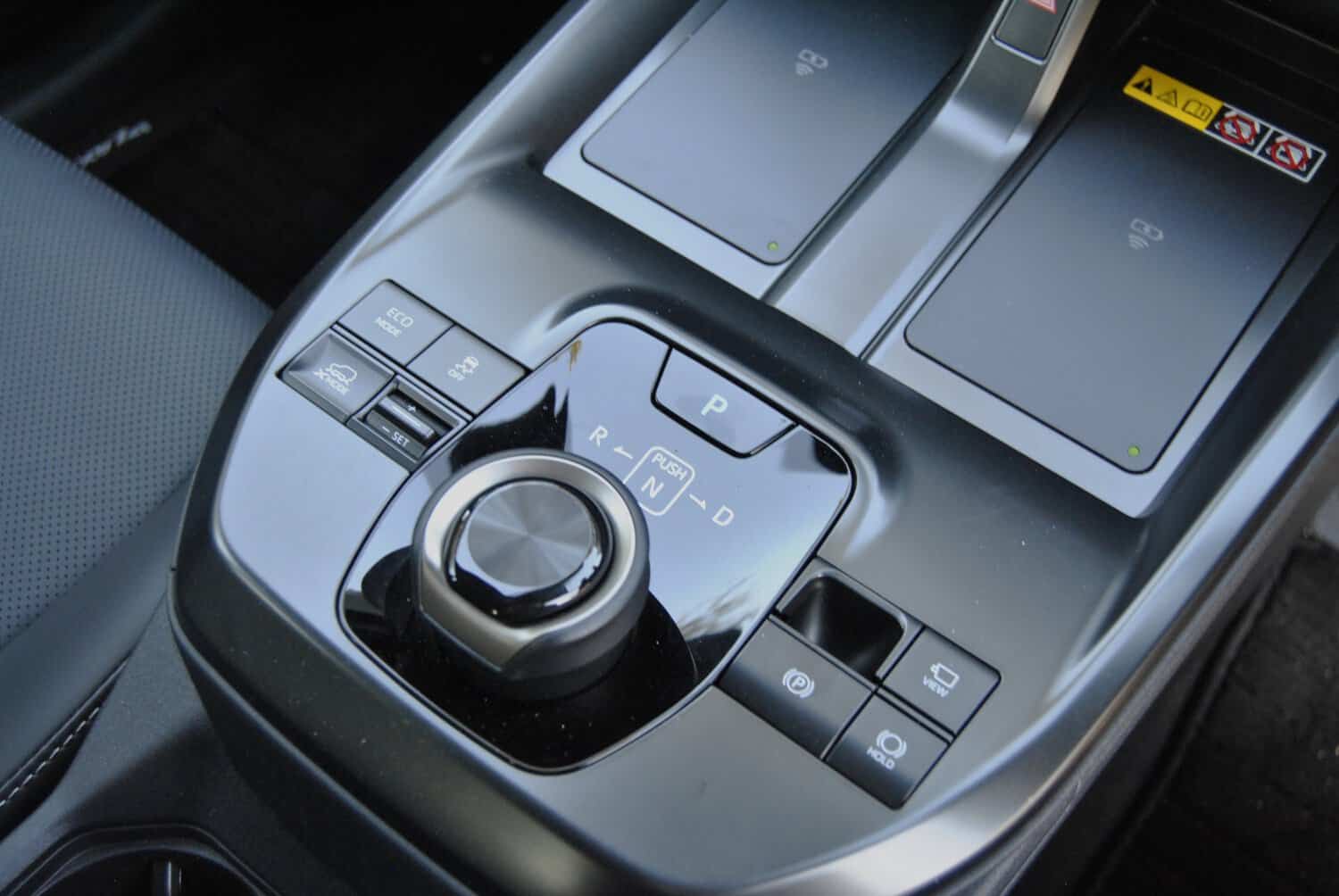
Although an Eco mode is provided, neither model offers a Sport mode – an unnamed ‘normal’ or ‘comfort’ setting being the opposite of Eco.
The claimed ground clearance is 200mm with the Touring, which also gets different roof rails and a washing system for the camera, having 216mm.
Colours
On the colour front, a traditional black leather interior is standard, however, the option for the bZ4X is light grey leather and a so-called khaki leather for the Touring.
In total, the standard bZ4X can be had in one of five exteriors:
- Attitude Black;
- Midnight Grey;
- Attitude Red;
- Platinum White Pearl;
- Moonlight Ocean Metallic.
Somewhat different are the six hues for the Touring, namely:
- Magnetite Grey;
- Night Storm;
- Storm Blue;
- Crystal White Pearl;
- Brilliant Bronze Metallic;
- Ice Silver Metallic.
The drive
bZ4X
Starting outside Nelspruit and heading into the Mpumalanga lowlands in an effective looping route over two days, the first leg involved the standard bZ4X from the starting point to the outskirts of the Kruger National Park.
With less than 200km on its odometer, the “running in” process takes as a back seat as the bZ4X is instantly punchy in typical EV fashion.
Aside from being quiet and refined, the almost futuristic interior doesn’t appear its age as the mentioned facelift has resulted in improved materials and a premium feel.
Taken from its other e-TNGA stablemate, the Lexus RZ, the infotainment display takes a while getting used to – as does the “push-down” and rotate fly-by-wire gear selector – but has excellent resolution and still offers a pair of physical dials for the climate control.
Physical buttons are also a hallmark of the interior on both the centre console and steering wheel – the placing of the latter somewhat strange due to the position of the instrument cluster almost feeling akin of sitting “on top of the wheel” rather than behind it.
This, though, doesn’t detract from the bZ4X’s sorted dynamics and well devised steering wheel, which makes its feel more nimbler than its dimensions claim.
Elsewhere, the regenerative braking system can be adjusted using the paddle shifters which, on its highest setting, requires comparatively little input from the brake pedal to bring the bZ4X to a stop.
Ride quality also impressed with a compliant and comfortable setup on roads varying from smooth to cut up in places with a few potholes thrown in for good measure.
bZ4X Touring
The second leg of the journey to Nelspruit in the Touring provided the biggest surprise. Aside from its extra space, the larger battery makes for a faster, much more instant feel, in contrast to its added weight and greater dimensions threatening to blunt performance.
Simply put, the Touring adheres to the “going like a rocket” adage in a manner unlikely for even an electric station wagon.
A short off-road section, though, resulted in a jarring and bumpy feel, most likely as a result of the road-biased wheels and their pressures.
Back on the winding tarmac roads, the Touring feels better sorted than the normal bZ4X, though it stands to reason that it will most likely account for the fewest of the 24 units Toyota projects to sell every month.
Conclusion
With the bZ4X, Toyota concludes its product roll-out 2026 after the recent unveilings of the Land Cruiser FJ, RAV4 and Hilux.
In a similar vein to the latter, the wait for the bZ4X has, arguably, been worth it. Entering a segment occupied by comparatively cheaper Chinese products and other niche offerings from Alfa Romeo, BMW and Volvo, the bZ4X is near complete and in the case of the Touring, a hoot to drive.
While buyer acceptance of an electric Toyota priced well above R1-million will ultimately be the biggest determining factor going forward, the bZ4X can be seen as having what it takes to rival its opposition in the clearest way possible.
Price
Included in the bZ4X’s price tag is a three-year/100 000 km warranty, a six-service/90 000 km service plan and an eight-year/160 000 km battery warranty.
- bZ4X – R1 182 800
- bZ4X Touring – R1 317 700